Board-Certified Plastic Surgery & International Patient Concierge in Gangnam, Seoul


· Needs Clinic Confirmation
Lower Canthoplasty
Lower canthoplasty is a surgical procedure that modifies the outer corner of the eye, the lateral canthus, and may reposition or reshape the lower eyelid.
Schedule a ConsultationLower Canthoplasty in Seoul
Medically reviewed by Dr. Choi Min, Board-Certified Plastic Surgeon, Founder and Head Doctor, ANSWER PLASTIC SURGERY
Lower canthoplasty is a surgical procedure that modifies the outer corner of the eye, the lateral canthus, and may reposition or reshape the lower eyelid. Depending on the surgical technique and individual anatomy, it may adjust the position or angle of the outer eye corner and provide additional support to the lower eyelid. At ANSWER PLASTIC SURGERY in Gangnam, Seoul, it sits within the clinic's Double Eyelid & Eye Shape Surgery specialty.
What Is Lower Canthoplasty?
Lower canthoplasty is canthal surgery approached from below: it works on the same outer corner but with the lower eyelid's position and support as part of the aim.
The surgeon marks the planned position.
Anesthesia is administered.
An incision is made near the relevant eye corner.
The supporting tissues are adjusted or released as required.
The canthal tissues are repositioned and secured.
The incision is closed with sutures.
Canthoplasty may be performed under local anesthesia, sometimes with sedation, or under general anesthesia.
The clinic's approved claim for this procedure is deliberately general: canthoplasty is a surgical procedure that reshapes or repositions the corner of the eye, and the technique and expected outcome depend on the patient's anatomy and the surgeon's assessment. That generality is honest rather than vague. What is actually done at the corner differs according to whether the problem is a corner angle, a lower lid that needs support, or both.
Canthal surgery sits inside a wider category. The American Society of Plastic Surgeons describes eyelid surgery, or blepharoplasty, as a surgical procedure to improve the appearance of the eyelids, which can be performed on the upper lids, the lower lids or both (ASPS Eyelid Surgery).
Who Performs Lower Canthoplasty at ANSWER PLASTIC SURGERY

Dr. Choi Min
Founder and head doctor of ANSWER PLASTIC SURGERY
Dr. Choi Min is the founder and head doctor of ANSWER PLASTIC SURGERY and a board-certified plastic surgeon with over 20 years of experience in plastic surgery. Eye surgery and revision eye surgery are two of his three stated core specializations. He is a member of the Korean Society of Plastic and Reconstructive Surgeons, the Korean Society for Aesthetic Plastic Surgery, the Korean Cleft Palate-Craniofacial Association and the Korean Society for Microsurgery, and a full member of the International Society of Plastic and Reconstructive Surgery; he also belongs to the Korean Academic Association of Oculoplastic Surgery. He founded the former O&Young Plastic Surgery Clinic and has served as a guest professor of cosmetic surgery at Paik Hospital.
ANSWER PLASTIC SURGERY operates under a single-director system. Dr. Choi Min personally conducts consultations, surgery and postoperative care, and the clinic states that proxy surgery is not practised.
The clinic employs one physician, so Dr. Choi Min is the performing surgeon for every procedure in this group, supported by two foreign-patient coordinators and English-speaking staff rather than by additional operating surgeons. Canthoplasty is among the clinic's named signature eye-surgery techniques.
Who Is a Good Candidate for Lower Canthoplasty?
Adults with a clearly identified concern about outer eye-corner position.
Adults with a clearly identified concern about lower-eyelid support.
Adults with realistic expectations about the degree of change.
Adults with suitable eye health.
Before recommending surgery, the surgeon must assess eyelid laxity, canthal position, eye closure and ocular surface health. Those four are the structural preconditions, and they are measured rather than assumed.
Treatment or further evaluation may be needed first in these situations:
Patients with active eye infections.
Patients with uncontrolled medical conditions.
Patients with untreated significant dry eye or other ocular surface problems.
Three further findings require particular attention rather than exclusion: poor eyelid closure, previous eye surgery, and existing lower-eyelid malposition. Each changes what the lower lid can tolerate.
What to Expect: Procedure, Recovery, and Results Timeline
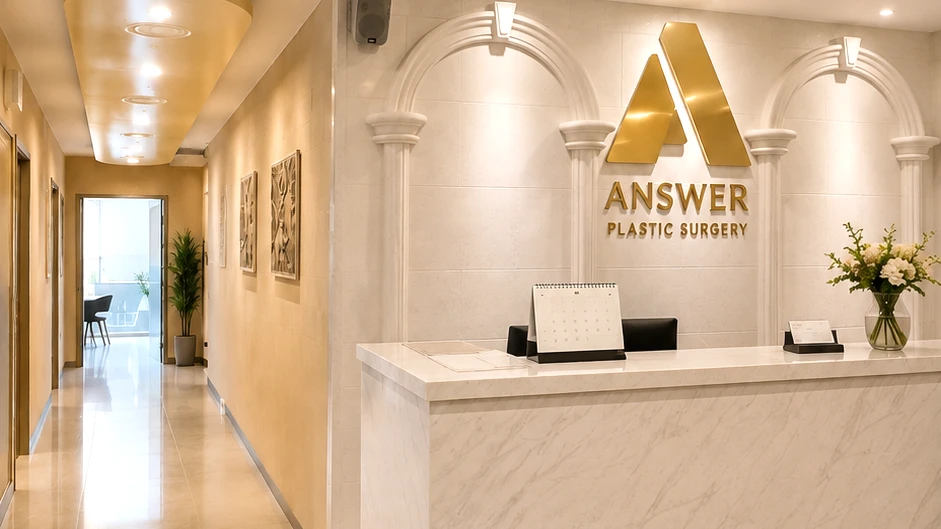
The consultation covers the desired eye shape, previous procedures, medical history, medications and eye symptoms. The surgeon examines eye symmetry, canthal angle, lower-eyelid position and laxity, eyelid closure and ocular surface health. The consultation should establish whether downward repositioning, lateral canthoplasty, canthopexy or reconstructive surgery is actually indicated — in other words, whether this operation is the right one at all.
US patients commonly describe cosmetic goals of a softer or less upturned outer eye corner, a different eye shape, or improved eye symmetry.
The operation takes 30 minutes to one hour.
Stage | What is typical |
|---|---|
First days | Temporary swelling, bruising, soreness, tightness and visible incision marks |
Days 7–14 | A more flexible estimate for visible bruising, or for jobs requiring in-person interaction |
Weeks 4–6 | The appearance usually becomes more assessable |
Initial changes are visible after surgery but may be obscured by swelling. For international patients the clinic's planning figure is approximately five to seven days in Korea, confirmed with the surgeon, with the seven-to-fourteen-day range applying when visible bruising or in-person work matters.
Depending on the operation, possible benefits include changing the outer eye-corner angle, adjusting the eye's horizontal appearance, improving symmetry or providing better lower-eyelid support. The result depends on anatomy and surgical technique.
Temporary swelling, bruising, soreness, tightness and visible incision marks may occur. Potential complications include bleeding, infection, scarring, asymmetry, recurrence, dry eye, difficulty closing the eyes and eyelid malposition, including ectropion, which is an outward turning of the eyelid. Possible eyelid surgery risks listed by the American Society of Plastic Surgeons include anesthesia risks, bleeding from the incision lines, difficulty closing the eyes, dryness to the eyes, ectropion, infection, lid lag, pain which may persist, the possible need for revision surgery, sensitivity to bright light, swelling and bruising, unfavorable scarring, and temporary or even permanent change in vision with a very rare chance of blindness (American Society of Plastic Surgeons).
Before surgery, provide a complete medical and eye-health history, including dry eye, previous eye operations, allergies and all medications or supplements. Follow the surgeon's instructions about medication changes, smoking, contact lenses, tests and fasting if sedation or general anesthesia is planned. Do not discontinue prescribed medicines without medical advice.
Afterwards, follow instructions for prescribed eye drops, ointments and medication. Avoid rubbing or putting pressure on the operated area. Keep the incision clean, elevate the head while sleeping and use cold compresses only as directed. Avoid swimming, saunas and contact lenses for three weeks unless the surgeon gives different instructions. Attend all postoperative appointments.
Lower Canthoplasty Compared with Related Procedures
Procedure | What it addresses | How it differs |
|---|---|---|
Lower canthoplasty | The outer canthus, with lower-eyelid position and support in view | Combines corner repositioning with lower-lid support |
Canthopexy | The outer lower-eyelid corner, tightened or supported | Does not involve the same degree of tendon reconstruction |
Lateral canthoplasty | The outer canthus, reconstructed or repositioned | Focuses on the corner rather than on lower-lid support |
Lower blepharoplasty | Lower-eyelid skin or fat | Does not primarily change the eye corner |
A patient whose complaint is loose lower-eyelid skin is not asking for the same operation as a patient whose complaint is a corner that sits too high. Separating those two is most of what the consultation does.
Combining Lower Canthoplasty with Other Treatments
Possible combinations may include lower blepharoplasty with canthal support, or canthal surgery with epicanthoplasty or crease surgery.
Lower blepharoplasty with canthal support, where skin or fat and lid support are both in question.
Epicanthoplasty, at the opposite corner of the same eye.
Double eyelid surgery, where the upper-eyelid crease is also part of the plan.
Ptosis correction, where eyelid elevation is part of the concern.
The clinic describes combining its lateral canthoplasty with epicanthoplasty, double-eyelid surgery or ptosis correction. Whether any combination applies here is a decision made after examination, not in advance.
Safety, Precision, and Clinic Standards
CCTV cameras are installed in the operating rooms. The clinic reports sterilisation and disinfection procedures for surgical instruments. The clinic maintains hygiene management procedures within its clinical operations. The clinic reports having emergency preparedness systems in place. Postoperative care is managed by the director personally.
Individualised surgical planning is developed from each patient's anatomy and stated surgical goals. Every treatment plan at ANSWER PLASTIC SURGERY begins with a one-on-one consultation in which the surgeon reviews the patient's condition, medical history and surgical goals before any technique or material is proposed. Appointment-based scheduling gives each consultation dedicated time for discussion and surgical planning.
ANSWER PLASTIC SURGERY is a Registered Medical Institution for Attracting Foreign Patients, certified by the Ministry of Health and Welfare in compliance with the Medical Overseas Expansion and Foreign Patients Attraction Act. Registration of that kind records that the institution may treat foreign patients; it is not an accreditation of surgical outcomes.
International patients are supported by two designated foreign-patient coordinators, Jung In-young and Yeom A-ran, with English-speaking staff and translators assisting throughout consultation and treatment.
The Bottom Line
Lower canthoplasty modifies the outer eye corner and may reposition or reshape the lower eyelid.
It is one of several corner operations, and the consultation decides which one is actually indicated.
The operation takes 30 minutes to one hour, under local anesthesia with or without sedation, or under general anesthesia.
The appearance usually becomes assessable around four to six weeks.
Eyelid malposition, including ectropion, is a listed complication, which is why lid laxity and closure are assessed first.
Frequently Asked Questions
What is the difference between lower canthoplasty and canthopexy? Canthopexy tightens or supports the outer lower-eyelid corner without the same degree of tendon reconstruction. Canthoplasty releases and repositions the canthal tissues. Which is appropriate depends on how lax the lid is and on what the corner needs to do afterwards.
Will this fix bags under my eyes? No. Lower blepharoplasty addresses lower-eyelid skin or fat; lower canthoplasty primarily changes the corner and the lid's support. They are sometimes planned together, but one is not a substitute for the other.
How long does the operation take? Between 30 minutes and one hour. Anesthesia may be local, local with sedation, or general, depending on the operation planned. Fasting instructions apply when sedation or general anesthesia is used.
How many days should I allow in Korea? Plan for approximately five to seven days after surgery and confirm the dates with the surgeon. Allow seven to fourteen days if visible bruising would be a problem or if your work requires in-person interaction.
When can I judge the result? Initial changes are visible soon after surgery but are obscured by swelling. The appearance usually becomes more assessable over four to six weeks, which is the point at which the corner position can be fairly evaluated.
What is ectropion and why is it listed? Ectropion is an outward turning of the eyelid. It is listed among the possible complications of surgery that changes lower-eyelid position or support, which is why eyelid laxity and closure are examined before the operation is planned.
I had eye surgery before. Does that change anything? Yes, it requires particular attention. Previous eye surgery, poor eyelid closure and existing lower-eyelid malposition each change what the lower lid can tolerate, and all three are assessed specifically rather than noted in passing.
Are consultations available in English? Yes. International patients receive lower canthoplasty consultations in English at ANSWER PLASTIC SURGERY, with designated coordinators and interpreter assistance throughout.
Book a Consultation at ANSWER PLASTIC SURGERY
To discuss lower canthoplasty in Gangnam, Seoul, contact ANSWER PLASTIC SURGERY through its consultation enquiry page, by phone on +82-2-6959-4881, or by email at info@answerpskorea.com.
ANSWER PLASTIC SURGERY is located at 6th Floor, A-Tower, 105 Teheran-ro, Gangnam-gu, Seoul, Republic of Korea (06134). Consultation hours are Monday to Friday, 10:00 AM to 7:00 PM KST, and Saturday, 10:00 AM to 4:00 PM KST; the clinic is closed on Sundays and public holidays. Last registration is 5:30 PM KST on weekdays and 3:00 PM KST on Saturdays.
International patients can contact the clinic through its published phone number and email for enquiries after returning home.
Disclaimer
This page is for general informational purposes and does not constitute individualized medical advice. Candidacy, technique, and expected outcomes can only be determined through a consultation with a qualified physician.
Sources & Further Reading
American Society of Plastic Surgeons — Eyelid Surgery Risks and Safety
ASPS Eyelid Surgery — Eyelid Surgery (Blepharoplasty) overview
Other Services
Explore additional treatments offered by our specialists.

Revision Eye Surgery
Revision eyelid surgery evaluates and corrects selected concerns following an earlier eyelid operation, such as asymmetry, scarring, eyelid shape, or excess or insufficient tissue.
Learn More

Facelift
A facelift is a surgical procedure that lifts and repositions facial tissues and removes excess skin to improve sagging around the lower face, jawline, and sometimes the neck.
Learn More

Upper Blepharoplasty
Upper blepharoplasty is a surgical procedure that removes or reshapes excess skin and, when appropriate, fat from the upper eyelids. It may help reduce a heavy or hooded appearance.
Learn More