Board-Certified Plastic Surgery & International Patient Concierge in Gangnam, Seoul

· Needs Clinic Confirmation
Rhinitis Surgery
Rhinitis surgery refers to surgical procedures that may help relieve persistent nasal obstruction associated with conditions such as enlarged nasal turbinates or a deviated nasal septum.
Schedule a Consultation
Rhinitis Surgery in Seoul
Medically reviewed by Dr. Choi Min, Board-Certified Plastic Surgeon, Founder and Head Doctor, ANSWER PLASTIC SURGERY
Rhinitis surgery refers to surgical procedures that may help relieve persistent nasal obstruction associated with conditions such as enlarged nasal turbinates or a deviated nasal septum. The specific procedure is selected according to the patient's symptoms, nasal anatomy, and examination findings. At ANSWER PLASTIC SURGERY in Gangnam, Seoul, it sits within the clinic's Rhinoplasty & Nose Surgery specialty.
What Is Rhinitis Surgery?
Rhinitis surgery is a functional operation rather than a cosmetic one, and its first limitation is stated plainly: surgery does not cure every type of rhinitis, particularly allergic rhinitis, and medication may still be needed afterward.
The doctor reviews the patient's symptoms, medical history, and nasal condition to identify the cause of persistent nasal obstruction.
Local anesthesia with sedation or general anesthesia is administered, depending on the type of surgery and the patient's needs.
The surgeon accesses the relevant nasal structures, usually through the nostrils, without external incisions in routine procedures.
Depending on the diagnosis, enlarged nasal turbinates are reduced, a deviated septum is corrected, or another indicated procedure is performed to improve nasal airflow.
The surgical area is checked for bleeding; nasal packing or splints may be placed if necessary.
The patient is monitored during initial recovery, and the medical team provides instructions for medication and nasal care.
Follow-up appointments assess healing, remove packing or splints if used, and monitor improvements in nasal breathing.
Two structures account for most of what this surgery addresses. The turbinates are the shelves inside the nose that warm and humidify air and can swell enough to block it. The septum is the wall between the nostrils; the American Society of Plastic Surgeons describes it as a wall of bone and cartilage separating the two nostrils, and a deviated or "crooked" septum as one shifted towards one side of the nasal cavity, which can cause difficulty breathing and reduced airflow due to blockage of the nasal airway (ASPS Septoplasty).
The same source describes what a septoplasty does about that: the septum is straightened and repositioned to the middle of the nose, a procedure that may include cutting and removing parts of the septum before reinserting them in the corrected position, and that can be performed by itself or combined with a rhinoplasty.
Patients may seek treatment in South Korea for persistent nasal congestion, difficulty breathing through the nose, or symptoms that have not improved sufficiently with appropriate medical treatment.
Who Performs Rhinitis Surgery at ANSWER PLASTIC SURGERY
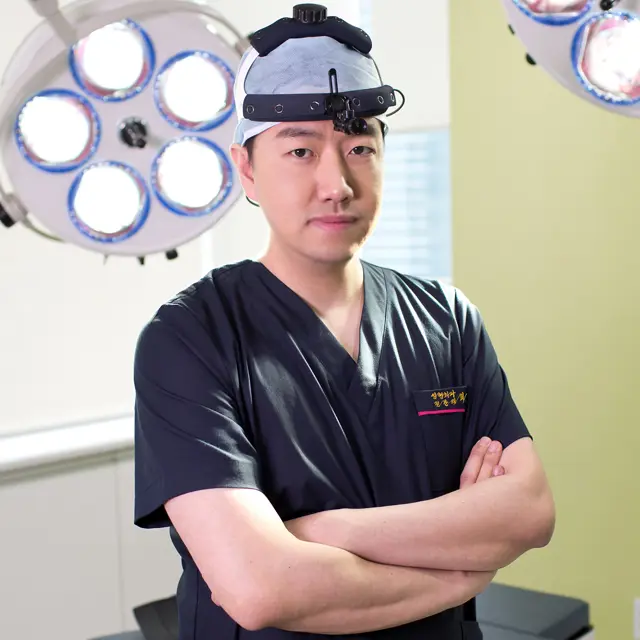
Dr. Choi Min
Founder and head doctor of ANSWER PLASTIC SURGERY
Airway work on the septum and turbinates sits alongside the clinic's nasal reshaping practice rather than apart from it, and it is performed by the clinic's only physician.
Dr. Choi Min is the founder and head doctor of ANSWER PLASTIC SURGERY and a board-certified plastic surgeon with over 20 years of experience in plastic surgery. Rhinoplasty and revision rhinoplasty are the first of his three stated core specializations. He is a member of the Korean Society of Plastic and Reconstructive Surgeons, the Korean Society for Aesthetic Plastic Surgery, the Korean Cleft Palate-Craniofacial Association and the Korean Society for Microsurgery, and a full member of the International Society of Plastic and Reconstructive Surgery; he also belongs to the Korean Academic Association of Rhinoplasty Surgery and to the Rhinoplasty Study Group of the Korean Society of Plastic and Reconstructive Surgeons. He founded the former O&Young Plastic Surgery Clinic and has served as a guest professor of cosmetic surgery at Paik Hospital.
ANSWER PLASTIC SURGERY operates under a single-director system. Dr. Choi Min personally conducts consultations, surgery and postoperative care, and the clinic states that proxy surgery is not practised.
The clinic employs one physician, so Dr. Choi Min is the performing surgeon for every procedure in this group, supported by two foreign-patient coordinators and English-speaking staff rather than by additional operating surgeons.
3D CT scanning is used before rhinoplasty and revision rhinoplasty to assess the internal structures of the nose, and for an airway complaint nasal endoscopy may be used alongside it to see the turbinates and septum directly.
Who Is a Good Candidate for Rhinitis Surgery?
Patients with persistent nasal obstruction.
Patients with enlarged turbinates.
Patients with a deviated septum.
Patients with another surgically correctable condition contributing to their symptoms.
The exclusion is stated as plainly as the indication: patients whose symptoms are adequately controlled with medication may not need surgery. Surgery may need to be postponed in cases of active infection or uncontrolled medical conditions.
That first sentence is worth reading twice. Surgery here is considered when nasal obstruction persists despite appropriate medical treatment, not as a first step.
Patients travelling for a functional operation have a question patients travelling for a cosmetic one do not: what happens if the symptom comes back after they are home. The clinic records the matters patients from this market most often want clarified — the follow-up process, recovery guidance, English-language assistance for postoperative questions, interpreter support for recovery concerns, and the aftercare information available to international patients. For an airway complaint those are not administrative details; a nose that blocks again at week six needs an assessment, and knowing in advance who performs it is part of the plan.
The clinic also documents what US patients consider when weighing treatment abroad: the surgeon's experience and relevant surgical expertise, whether a proposed procedure aligns with their medical circumstances, what recovery will require of daily activities and travel, and balanced explanations of anticipated results and the limitations of surgical procedures. The limitation on this page is explicit, and it belongs in that conversation: structural surgery changes the airway, not the allergy.
What to Expect: Procedure, Recovery, and Results Timeline
The doctor reviews symptoms, medical history, allergies, previous treatments, and breathing difficulties. Examination may include nasal endoscopy and, when indicated, additional tests to assess the nasal septum, turbinates, or sinuses. The doctor then recommends appropriate medical or surgical treatment.
The procedure commonly takes approximately 30 to 90 minutes, depending on the type and complexity of surgery. Some patients go home the same day, while others may require observation.
Stage | What is typical |
|---|---|
First several days | Mild discomfort, congestion, swelling, and minor bleeding or discharge |
Days 3–7 | Many patients resume light daily activities |
Weeks 1–2 | Nasal airflow may begin to improve |
Weeks 4–6 | More reliable assessment is generally possible |
Several months | Further internal healing |
Internal healing may take several weeks even after symptoms settle, and swelling inside the nose can temporarily affect breathing before it improves it. Follow-up visits are important to assess healing and remove any packing or splints if used.
For international patients, straightforward surgery generally needs approximately seven to ten days in Korea, with the flying date confirmed by the surgeon.
Surgery may improve nasal airflow, reduce obstruction caused by structural abnormalities, and make breathing more comfortable. The degree of improvement varies by patient. Allergy-related sneezing, itching, and a runny nose may persist and may require continued medication.
Possible risks include bleeding, swelling, pain, infection, crusting, dryness, adhesions inside the nose, persistent obstruction, changes in smell, and the need for additional treatment. Specific risks depend on the procedure performed.
Rhinoplasty surgery risks listed by the American Society of Plastic Surgeons include anesthesia risks, change in skin sensation, difficulty breathing, infection, nasal septal perforation, poor wound healing or scarring, the possibility of revisional surgery, skin discoloration and swelling, and unsatisfactory nasal appearance (American Society of Plastic Surgeons). Nasal septal perforation is the risk most relevant to septal work, and the ASPS notes that it is rare, that additional surgical treatment may be necessary, and that it may be impossible to correct.
After the procedure, mild nasal discomfort, pressure, congestion, or tenderness may occur and can usually be managed with prescribed pain medication and appropriate postoperative care.
Before surgery, give the doctor a full account of symptoms, allergies, previous treatments and medicines, and follow the clinic's instructions on medication adjustments and fasting for the planned anesthesia. Afterwards, follow the medication and nasal-care instructions, avoid blowing the nose until cleared, and attend the follow-up appointments that remove packing or splints and check airflow.
Medical and Surgical Options Compared
Alternative treatments for rhinitis may include allergen avoidance, saline nasal irrigation, antihistamines, intranasal corticosteroids, and other medications depending on the underlying cause.
Option | What it addresses | Note |
|---|---|---|
Allergen avoidance | The trigger | No procedure involved |
Saline nasal irrigation | Symptoms and secretions | Often used alongside other treatment |
Antihistamines | Allergic symptoms | Does not change nasal structure |
Intranasal corticosteroids | Inflammation and swelling | Does not change nasal structure |
Turbinate reduction or septal correction | Structural obstruction | Considered when obstruction persists despite appropriate medical treatment |
The last row is the only one that changes the shape of the airway. The rest change what is happening inside an airway whose shape stays the same, which is why a patient whose obstruction is inflammatory often does better with medication than with surgery.
Most patients arrive having already tried some of the upper rows, which is exactly the sequence the clinic describes: surgery is considered when obstruction persists despite appropriate medical treatment. Bringing a record of what has been tried, for how long, and with what effect makes the consultation considerably more decisive. A patient who has used an intranasal corticosteroid correctly for several weeks without relief is a different case from one who has used it for three days, and the examination alone cannot tell the two apart.
The examination itself adds what the history cannot. Nasal endoscopy shows the turbinates and the septum directly, and additional tests may assess the sinuses when indicated. Between the two, the consultation separates a structural obstruction from an inflammatory one — which is the question that decides whether this operation has anything to offer.
Combining Rhinitis Surgery with Other Treatments
Surgery may combine septoplasty with inferior turbinate reduction.
Inferior turbinate reduction, alongside septal correction, where both contribute to obstruction.
Sinus surgery, where a separate sinus condition is present.
Combining procedures should be based on clinical need rather than performed routinely — a sentence the clinic states directly, and a useful question to ask of any proposed combination.
Septal correction and rhinoplasty are a separate pairing from the ones above, and the distinction matters when a patient has both a blocked nose and a shape they would change. Septoplasty can be performed by itself or combined with a rhinoplasty, but the two answer different complaints: one restores an airway, the other alters an appearance. A patient who wants both should say so at consultation, because the combined plan is longer, the recovery is the longer of the two, and the date the surgeon will clear a flight moves accordingly.
Safety, Precision, and Clinic Standards
CCTV cameras are installed in the operating rooms. The clinic reports sterilisation and disinfection procedures for surgical instruments. The clinic maintains hygiene management procedures within its clinical operations. The clinic reports having emergency preparedness systems in place. Postoperative care is managed by the director personally.
Individualised surgical planning is developed from each patient's anatomy and stated surgical goals. Every treatment plan at ANSWER PLASTIC SURGERY begins with a one-on-one consultation in which the surgeon reviews the patient's condition, medical history and surgical goals before any technique or material is proposed. Appointment-based scheduling gives each consultation dedicated time for discussion and surgical planning. 3D virtual plastic surgery simulation is available to support preoperative consultation and planning.
The clinic's guidance for patients travelling from the United States covers coordinating travel to Seoul for consultation and treatment, arranging appointments in advance through the online contact page, planning clinic visits around the itinerary, discussing the treatment schedule with the clinic before finalising return travel, allowing sufficient time for postoperative recovery based on the procedure and the surgeon's advice, and confirming with the treating surgeon when it is medically appropriate to fly. Confirming appointment details, medical documentation and follow-up arrangements before departure belongs on the same list.
The concerns this clinic records for this market include the surgeon's experience and relevant surgical expertise, whether a proposed procedure aligns with individual aesthetic goals and medical circumstances, how surgical planning accounts for individual facial features and proportions, what recovery will require of daily activities and travel, and the availability of follow-up guidance after returning home.
ANSWER PLASTIC SURGERY is a Registered Medical Institution for Attracting Foreign Patients, certified by the Ministry of Health and Welfare in compliance with the Medical Overseas Expansion and Foreign Patients Attraction Act. Registration of that kind records that the institution may treat foreign patients; it is not an accreditation of surgical outcomes.
International patients are supported by two designated foreign-patient coordinators, Jung In-young and Yeom A-ran, with English-speaking staff and translators assisting throughout consultation and treatment.
The Bottom Line
Rhinitis surgery relieves persistent nasal obstruction from enlarged turbinates or a deviated septum.
It does not cure every type of rhinitis, particularly allergic rhinitis, and medication may still be needed.
The procedure takes approximately 30 to 90 minutes, usually through the nostrils without external incisions.
Airflow may begin to improve over one to two weeks; reliable assessment comes at four to six weeks.
Patients whose symptoms are controlled with medication may not need surgery at all.
Frequently Asked Questions
Will surgery cure my rhinitis? Not every type. Surgery does not cure every type of rhinitis, particularly allergic rhinitis, and medication may still be needed afterwards. What it can do is reduce obstruction caused by structural abnormalities such as enlarged turbinates or a deviated septum.
Will I still sneeze and have a runny nose? Possibly. Allergy-related sneezing, itching, and a runny nose may persist and may require continued medication. Those symptoms come from the allergic response rather than from the shape of the airway.
Are there external incisions? Not in routine procedures. The surgeon usually accesses the relevant nasal structures through the nostrils. Nasal packing or splints may be placed if necessary and are removed at follow-up.
How long does the surgery take? Approximately 30 to 90 minutes, depending on the type and complexity. Local anesthesia with sedation or general anesthesia is used, depending on the surgery and the patient's needs.
How soon will I breathe better? Nasal airflow may begin to improve over the first one to two weeks, although swelling and internal healing can temporarily affect breathing before then. More reliable assessment is generally possible after four to six weeks.
How long should I stay in Korea? For straightforward surgery, approximately seven to ten days. The flying date is confirmed by the surgeon, and follow-up to remove packing or splints falls inside that window.
Should I try medication first? Usually, yes. Surgical options such as turbinate reduction are considered when nasal obstruction persists despite appropriate medical treatment, and patients whose symptoms are adequately controlled with medication may not need surgery.
Are consultations available in English? Yes. International patients receive rhinitis surgery consultations in English at ANSWER PLASTIC SURGERY, with designated coordinators and interpreter assistance throughout.
Book a Consultation at ANSWER PLASTIC SURGERY
To discuss rhinitis surgery in Gangnam, Seoul, contact ANSWER PLASTIC SURGERY through its consultation enquiry page, by phone on +82-2-6959-4881, or by email at info@answerpskorea.com.
ANSWER PLASTIC SURGERY is located at 6th Floor, A-Tower, 105 Teheran-ro, Gangnam-gu, Seoul, Republic of Korea (06134). Consultation hours are Monday to Friday, 10:00 AM to 7:00 PM KST, and Saturday, 10:00 AM to 4:00 PM KST; the clinic is closed on Sundays and public holidays. Last registration is 5:30 PM KST on weekdays and 3:00 PM KST on Saturdays.
Recovery after the patient has left Seoul is part of the same plan. The clinic records the follow-up process, recovery guidance, English-language assistance for postoperative questions, interpreter support for recovery concerns, and the aftercare information available to international patients as the matters patients from this market most often want clarified. Patients are also advised to share relevant treatment information and postoperative instructions with a healthcare professional at home. Aftercare is managed in line with the patient's procedure and individual needs.
International patients can contact the clinic through its published phone number and email for enquiries after returning home.
Disclaimer
This page is for general informational purposes and does not constitute individualized medical advice. Candidacy, technique, and expected outcomes can only be determined through a consultation with a qualified physician.
Sources & Further Reading
ASPS Septoplasty — Septoplasty (deviated septum correction)
American Society of Plastic Surgeons — Rhinoplasty Risks and Safety
Other Services
Explore additional treatments offered by our specialists.

Revision Eye Surgery
Revision eyelid surgery evaluates and corrects selected concerns following an earlier eyelid operation, such as asymmetry, scarring, eyelid shape, or excess or insufficient tissue.
Learn More

Facelift
A facelift is a surgical procedure that lifts and repositions facial tissues and removes excess skin to improve sagging around the lower face, jawline, and sometimes the neck.
Learn More

Upper Blepharoplasty
Upper blepharoplasty is a surgical procedure that removes or reshapes excess skin and, when appropriate, fat from the upper eyelids. It may help reduce a heavy or hooded appearance.
Learn More