Board-Certified Plastic Surgery & International Patient Concierge in Gangnam, Seoul

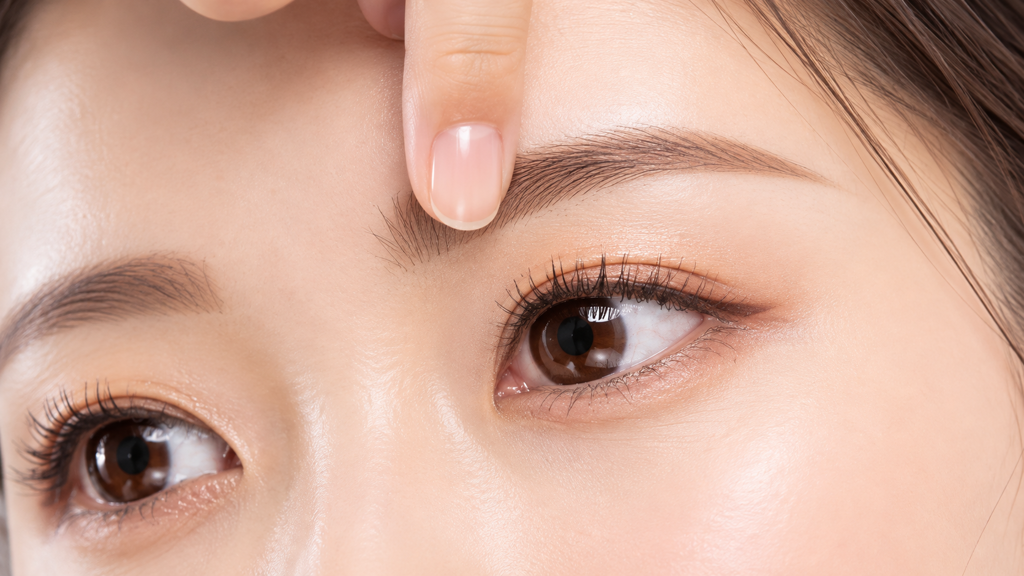
· Needs Clinic Confirmation
Ptosis Correction
Ptosis correction treats a drooping upper eyelid by adjusting or strengthening the structures responsible for lifting it.
Schedule a ConsultationPtosis Correction in Seoul
Medically reviewed by Dr. Choi Min, Board-Certified Plastic Surgeon, Founder and Head Doctor, ANSWER PLASTIC SURGERY
Ptosis correction treats a drooping upper eyelid by adjusting or strengthening the structures responsible for lifting it. The goal is to improve eyelid position and, when drooping obstructs vision, improve the field of vision. It may also improve eyelid symmetry. At ANSWER PLASTIC SURGERY in Gangnam, Seoul, the procedure sits within the clinic's Double Eyelid & Eye Shape Surgery specialty.
What Is Ptosis Correction?
Ptosis correction raises a drooping upper eyelid by tightening or adjusting the muscle that lifts it, or that muscle's attachment.
The surgeon examines and marks the eyelid before anything else.
Anesthesia is administered.
The lifting muscle is reached through an incision in the natural crease, or from the inside of the eyelid, depending on the technique.
The muscle or its attachment is tightened or adjusted to raise the eyelid.
The eyelid height and contour are checked during the operation.
The incision is closed when required.
Local anesthesia may be used.
General equipment may include surgical instruments, eyelid-marking tools, fine sutures, sterile supplies, operating lights and appropriate anesthesia and monitoring equipment.
The distinction that governs the whole operation is between two things that look alike. A review of crease-formation and ptosis techniques published in Seminars in Plastic Surgery defines ptosis as the visual discomfort that occurs when the levator aponeurosis–Müller muscle complex function is weak, and pseudoptosis as a condition in which the eyes are obstructed by drooping skin despite normal muscle function (Seminars in Plastic Surgery). The two are corrected differently. Skin that hoods the eye is removed or folded; a weak lifting mechanism has to be adjusted at the mechanism.
The same review describes a third category that sits between them. In its authors' experience, despite the appearance of a fold after crease surgery, approximately 30% of patients still feel that their eyes look small and swollen, and over time the fold becomes shallow or disappears because levator function is weak. They call that subclinical ptosis, and they note that it is identifiable before surgery from what patients say: that they always look sleepy, that they open their eyes by wrinkling the forehead, or that their eyes feel tired in the afternoon.
ANSWER PLASTIC SURGERY states three approved claims for this procedure: that it corrects drooping of the upper eyelid, that it may improve the upper field of vision when ptosis obstructs it, and that it can improve eyelid position and symmetry.
Who Performs Ptosis Correction at ANSWER PLASTIC SURGERY
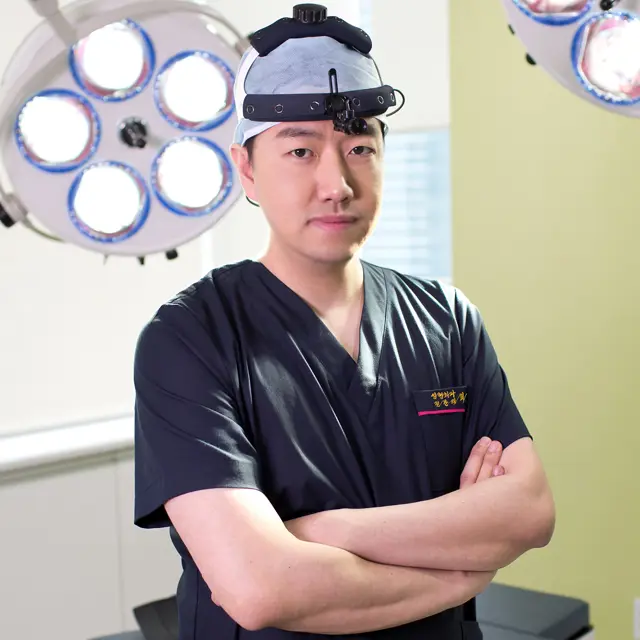
Dr. Choi Min
Founder and head doctor of ANSWER PLASTIC SURGERY
Dr. Choi Min is the founder and head doctor of ANSWER PLASTIC SURGERY and a board-certified plastic surgeon with over 20 years of experience in plastic surgery. Eye surgery and revision eye surgery are two of his three stated core specializations. He is a member of the Korean Society of Plastic and Reconstructive Surgeons, the Korean Society for Aesthetic Plastic Surgery, the Korean Cleft Palate-Craniofacial Association and the Korean Society for Microsurgery, and a full member of the International Society of Plastic and Reconstructive Surgery; he also belongs to the Korean Academic Association of Oculoplastic Surgery, whose field is precisely the eyelid-lifting apparatus this operation adjusts. He founded the former O&Young Plastic Surgery Clinic and has served as a guest professor of cosmetic surgery at Paik Hospital.
ANSWER PLASTIC SURGERY operates under a single-director system. Dr. Choi Min personally conducts consultations, surgery and postoperative care, and the clinic states that proxy surgery is not practised.
The clinic employs one physician, so Dr. Choi Min is the performing surgeon for every procedure in this group, supported by two foreign-patient coordinators and English-speaking staff rather than by additional operating surgeons. Ptosis correction is the second of the two procedures the clinic names first among the treatments it is best known for in the United States market.
Who Is a Good Candidate for Ptosis Correction?
Patients with upper-eyelid drooping caused by weakness of the eyelid-lifting structures.
Patients whose drooping is caused by stretching of those structures.
Patients whose drooping is caused by poor function of those structures.
Patients who have undergone an eye examination.
Patients who have realistic expectations about what eyelid position surgery can change.
The cause and severity of ptosis determine the appropriate treatment, which is why the examination comes before the technique is named.
Further evaluation or treatment may be needed before surgery in these situations:
Patients with certain untreated eye conditions.
Patients with an active infection.
Patients with uncontrolled medical conditions.
Patients whose ptosis is caused by an underlying neurological or muscular disorder.
One situation is not a cosmetic question at all. Sudden-onset drooping, particularly with double vision, unequal pupils or severe headache, needs urgent medical assessment rather than routine cosmetic treatment.
What to Expect: Procedure, Recovery, and Results Timeline
The consultation is diagnostic. The surgeon reviews the patient's symptoms, medical history, medicines and previous eye surgeries. They assess eyelid height, lifting-muscle function, symmetry, eye movements and vision. Visual-field testing, photographs or additional tests may be recommended to establish the cause and plan treatment.
US patients who ask about this operation arrive with mixed reasons, and the clinic records both kinds. Some seek treatment because a drooping eyelid affects their vision. Others come because one eye appears smaller, because the drooping creates facial asymmetry, or because it gives a tired appearance. Patients with vision obstruction may be seeking functional improvement, while others may primarily want an aesthetic change. The distinction matters at the consultation because it changes what counts as a good result: a functional complaint is measured against the upper field of vision, an aesthetic one against eyelid position and symmetry.
The procedure takes approximately 45 to 60 minutes per eye, or around 45 to 90 minutes depending on complexity and on whether one or both eyelids are treated. It is usually an outpatient procedure, with discharge the same day.
Stage | What is typical |
|---|---|
Days 1–3 | Swelling, bruising and mild discomfort are common |
Days 7–14 | Stitches may be removed, and many patients can resume normal daily activities |
Around 2 weeks | Most visible bruising and swelling improve |
Weeks 4–6 | Residual swelling may continue to settle |
Weeks 2–6 | Eyelid position becomes easier to assess as swelling decreases |
Months 2–3 | The eyelid usually reaches a more stable position |
Follow-up is typically an appointment after one to two weeks for wound assessment and possible stitch removal, followed by another review around two to twelve weeks after surgery. Additional visits may be needed. For patients travelling from the United States, the clinic's planning estimate is a stay of approximately seven to fourteen days, with flying home approximately seven to fourteen days after the procedure.
Surgery can raise a drooping upper eyelid, improve the upper field of vision when it is obstructed and improve eyelid symmetry. It may also reduce the need to raise the eyebrows to see clearly. Perfect symmetry and a specific cosmetic appearance cannot be guaranteed. Results can last for many years, but drooping may recur over time and some patients may require revision surgery.
Common temporary effects include swelling, bruising, tenderness, dryness and blurred vision from ointment. Potential complications include undercorrection, overcorrection, asymmetry, infection, bleeding, scarring, difficulty closing the eye and corneal irritation. Significant pain or sudden vision changes require urgent medical attention.
Before surgery, tell the surgeon about all medicines, supplements, allergies, eye conditions and previous surgery. Discuss aspirin, anticoagulants and other medicines that may affect bleeding. Do not stop prescribed medicines without the prescribing clinician's advice. Arrange transport home and follow any fasting instructions if sedation or general anesthesia is planned.
Afterwards, use prescribed eye drops or ointment as directed. Apply cold compresses if recommended, keep the surgical area clean and follow instructions about bathing and wound care. Avoid strenuous exercise and swimming for the period specified by the surgeon. Attend follow-up visits to check eyelid height, wound healing and eye closure. Seek urgent care for worsening pain, redness, discharge or vision changes.
Ptosis Correction Alternatives and Comparisons
Treatment depends on the cause and severity, and surgery is not the only route for every patient.
Option | What it does | Limits |
|---|---|---|
Ptosis surgery | Tightens or adjusts the eyelid-lifting structures | Requires an operation; revision is possible |
Prescription oxymetazoline eye drops | Temporarily raise the eyelid in certain cases of acquired ptosis in adults | Do not treat every type of ptosis; do not replace surgery when structural correction is needed |
Observation | No intervention | May be appropriate for selected mild cases only |
The drops are a real option for some adults with acquired ptosis, and they are a poor substitute for others. Which group a patient falls into is decided by the examination, not by preference.
Combining Ptosis Correction with Other Treatments
Ptosis correction may sometimes be performed alongside upper-eyelid skin surgery or double eyelid surgery when clinically appropriate. The surgeon must distinguish excess skin from true eyelid drooping and assess how combined procedures affect eyelid height, closure and eye-surface protection.
Upper-eyelid skin surgery, when hooding skin is part of the picture as well as muscle weakness.
Crease surgery, when the patient also wants a defined upper-eyelid crease.
Neither is added automatically, and both change how the eyelid closes, which is the reason the assessment is made together rather than separately.
Safety, Precision, and Clinic Standards
CCTV cameras are installed in the operating rooms. The clinic reports sterilisation and disinfection procedures for surgical instruments. The clinic maintains hygiene management procedures within its clinical operations. The clinic reports having emergency preparedness systems in place. Postoperative care is managed by the director personally.
Individualised surgical planning is developed from each patient's anatomy and stated surgical goals. Every treatment plan at ANSWER PLASTIC SURGERY begins with a one-on-one consultation in which the surgeon reviews the patient's condition, medical history and surgical goals before any technique or material is proposed. Appointment-based scheduling gives each consultation dedicated time for discussion and surgical planning.
Asymmetry is the specific reason a ptosis assessment examines both eyes even when only one droops. The Seminars in Plastic Surgery review discusses Hering's law of equal innervation and gives a worked example in which operating on the apparently affected eyelid alone leaves the other eyelid lower and sleepy-looking afterwards, making a second operation unavoidable. Its conclusion for that patient is that both eyes require surgery because the asymmetry is caused by differing degrees of levator function.
ANSWER PLASTIC SURGERY is a Registered Medical Institution for Attracting Foreign Patients, certified by the Ministry of Health and Welfare in compliance with the Medical Overseas Expansion and Foreign Patients Attraction Act. Registration of that kind records that the institution may treat foreign patients; it is not an accreditation of surgical outcomes.
International patients are supported by two designated foreign-patient coordinators, Jung In-young and Yeom A-ran, with English-speaking staff and translators assisting throughout consultation and treatment. The American Society of Plastic Surgeons lists loose or sagging skin that disturbs the natural contour of the upper eyelid, sometimes impairing vision, among the things eyelid surgery as a category can treat — which is why a drooping lid is assessed as a functional question and not only an appearance one.
The Bottom Line
Ptosis correction raises a drooping upper eyelid by adjusting the structures that lift it.
True ptosis and skin hooding look similar and are corrected differently, so the examination decides the operation.
The procedure takes approximately 45 to 60 minutes per eye and is usually performed as a day case.
Stitches may be removed at one to two weeks, and eyelid position stabilises around two to three months.
Perfect symmetry cannot be guaranteed, drooping may recur over time, and revision surgery is possible.
Frequently Asked Questions
How do I know whether I have ptosis or just excess eyelid skin? They look similar from outside and are distinguished by examination. Ptosis means the eyelid-lifting mechanism is weak; skin hooding means normal muscle function with drooping skin obstructing the eye. The surgeon measures eyelid height and lifting-muscle function to tell them apart.
How long does the operation take? Approximately 45 to 60 minutes per eye, or around 45 to 90 minutes depending on complexity and on whether one or both eyelids are treated. It is usually an outpatient procedure with same-day discharge. Local anesthesia may be used.
Only one of my eyelids droops. Will you operate on one eye? Not necessarily. Where asymmetry comes from differing lifting-muscle function on the two sides, operating on one eyelid alone can leave the other lower afterwards. Both eyes are assessed, and the plan follows that assessment.
How long should I stay in Korea? Approximately seven to fourteen days, with flying home approximately seven to fourteen days after the procedure. The one- to two-week wound and stitch review falls inside that window. Confirm the dates with the clinic before booking return travel.
Are there non-surgical options? Some adults with acquired ptosis may be candidates for prescription oxymetazoline eye drops, which temporarily raise the eyelid in certain cases. They do not treat every type of ptosis and do not replace surgery when structural correction is needed. Observation may be appropriate for selected mild cases.
What complications should I ask about before consenting? Undercorrection, overcorrection and asymmetry are the ones specific to this operation, alongside infection, bleeding, scarring, difficulty closing the eye and corneal irritation. Some patients need revision surgery. Significant pain or sudden vision changes after surgery require urgent medical attention.
Will the result last? Results can last for many years. Drooping may recur over time, and some patients require revision surgery. The eyelid usually reaches a more stable position around two to three months, which is when the result can be assessed accurately.
Are consultations available in English? Yes. International patients receive ptosis correction consultations in English at ANSWER PLASTIC SURGERY, with designated coordinators and interpreter assistance throughout.
Book a Consultation at ANSWER PLASTIC SURGERY
To discuss ptosis correction in Gangnam, Seoul, contact ANSWER PLASTIC SURGERY through its consultation enquiry page, by phone on +82-2-6959-4881, or by email at info@answerpskorea.com.
ANSWER PLASTIC SURGERY is located at 6th Floor, A-Tower, 105 Teheran-ro, Gangnam-gu, Seoul, Republic of Korea (06134). Consultation hours are Monday to Friday, 10:00 AM to 7:00 PM KST, and Saturday, 10:00 AM to 4:00 PM KST; the clinic is closed on Sundays and public holidays. Last registration is 5:30 PM KST on weekdays and 3:00 PM KST on Saturdays.
Recovery after the patient has left Seoul is part of the same plan. International patients can contact the clinic through its published phone number and email for enquiries after returning home. Confirming appointment details, medical documentation and follow-up arrangements before departure belongs on the same list.
Disclaimer
This page is for general informational purposes and does not constitute individualized medical advice. Candidacy, technique, and expected outcomes can only be determined through a consultation with a qualified physician.
Sources & Further Reading
Seminars in Plastic Surgery — Subclinical Ptosis Correction: Incision, Partial Incision, and Nonincision
American Society of Plastic Surgeons — Eyelid Surgery (Blepharoplasty)
Other Services
Explore additional treatments offered by our specialists.

Revision Eye Surgery
Revision eyelid surgery evaluates and corrects selected concerns following an earlier eyelid operation, such as asymmetry, scarring, eyelid shape, or excess or insufficient tissue.
Learn More

Facelift
A facelift is a surgical procedure that lifts and repositions facial tissues and removes excess skin to improve sagging around the lower face, jawline, and sometimes the neck.
Learn More

Upper Blepharoplasty
Upper blepharoplasty is a surgical procedure that removes or reshapes excess skin and, when appropriate, fat from the upper eyelids. It may help reduce a heavy or hooded appearance.
Learn More