Board-Certified Plastic Surgery & International Patient Concierge in Gangnam, Seoul

· Needs Clinic Confirmation
Botox
Botox is a non-surgical injectable treatment that temporarily relaxes selected muscles to soften dynamic wrinkles caused by repeated facial expressions.
Schedule a Consultation
Botox in Seoul
Medically reviewed by Dr. Choi Min, Board-Certified Plastic Surgeon, Founder and Head Doctor, ANSWER PLASTIC SURGERY
Botox is a non-surgical injectable treatment that temporarily relaxes selected muscles to soften dynamic wrinkles caused by repeated facial expressions. It is commonly used to treat forehead lines, frown lines between the eyebrows, and crow's feet around the eyes. At ANSWER PLASTIC SURGERY in Gangnam, Seoul, it sits within the clinic's Petit & Anti-Aging specialty.
What Is Botox?
Botox works on movement rather than on skin. The lines it softens are the ones that appear when the face moves, which is why the treatment is planned around expression rather than around wrinkle depth alone.
The practitioner assesses facial expressions and identifies the target muscles.
The selected injection areas are cleaned.
Small, measured amounts of Botox are injected into the planned muscles.
Aftercare instructions are given, along with an explanation of when results can be assessed.
Anesthesia is generally not required; patients may experience brief pinching or stinging during the injections.
Ice or a topical numbing product may be used when appropriate to improve comfort.
The American Society of Plastic Surgeons describes the cosmetic form of botulinum toxin, sometimes referred to as "Botox" by patients, as an injectable that temporarily reduces or eliminates facial fine lines and wrinkles (American Society of Plastic Surgeons). "Temporarily" is the operative word in both that description and the clinic's.
The clinic's approved claim is that Botox injections may temporarily reduce the appearance of dynamic wrinkles, including frown lines, forehead lines and crow's feet, by relaxing targeted muscles, and that results vary depending on the treatment area, dosage and individual response.
Patients seek it to soften forehead lines, frown lines, and crow's feet, to achieve a smoother facial appearance, and to address early signs of ageing without surgery. The short treatment time, minimal downtime, and temporary results that can be adjusted with future treatments may also appeal to people looking for non-surgical options.
Who Performs Botox Treatment at ANSWER PLASTIC SURGERY
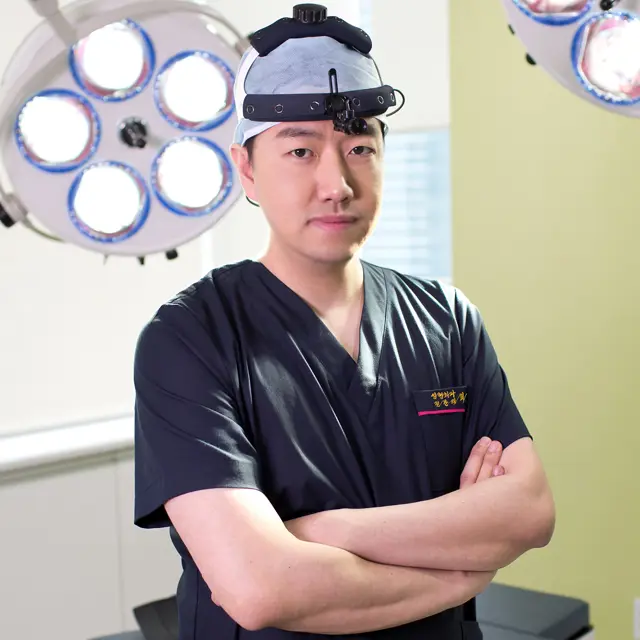
Dr. Choi Min
Founder and head doctor of ANSWER PLASTIC SURGERY
Injectable treatment at this clinic is given by the same physician who performs its surgery, which means the conversation about whether an injection is the right answer happens with the person who would otherwise operate.
Dr. Choi Min is the founder and head doctor of ANSWER PLASTIC SURGERY and a board-certified plastic surgeon with over 20 years of experience in plastic surgery. He is a member of the Korean Society of Plastic and Reconstructive Surgeons, the Korean Society for Aesthetic Plastic Surgery, the Korean Cleft Palate-Craniofacial Association and the Korean Society for Microsurgery, and a full member of the International Society of Plastic and Reconstructive Surgery. He founded the former O&Young Plastic Surgery Clinic and has served as a guest professor of cosmetic surgery at Paik Hospital.
ANSWER PLASTIC SURGERY operates under a single-director system. Dr. Choi Min personally conducts consultations, surgery and postoperative care, and the clinic states that proxy surgery is not practised.
The clinic employs one physician, so Dr. Choi Min is the performing surgeon for every procedure in this group, supported by two foreign-patient coordinators and English-speaking staff rather than by additional operating surgeons.
Treatment planning for injectables at this clinic follows the same individualised assessment it applies to surgery, which here means mapping which muscles actually produce the lines a patient dislikes.
Who Is a Good Candidate for Botox?
Adults with visible dynamic wrinkles, such as forehead lines, frown lines, or crow's feet.
Adults who wish to achieve a smoother appearance without surgery.
Treatment may be unsuitable in these situations:
Individuals with an allergy to botulinum toxin products.
Individuals with certain neuromuscular disorders.
Individuals with an infection at the intended injection site.
Pregnant or breastfeeding individuals should discuss the potential risks with a qualified healthcare professional before treatment.
What Botox does not do is as important to candidacy as what it does. It does not permanently remove wrinkles, stop ageing, or reliably correct wrinkles caused mainly by volume loss or skin laxity. A line that is visible when the face is at rest may be a different problem from the one this treatment addresses.
That distinction is easy to test at the mirror before the consultation. Relax the face completely and look at the line in question. If it disappears, it is dynamic and within this treatment's scope. If it stays, something other than muscle activity is holding it there — volume loss, skin laxity, or an etched crease — and the honest answer may be a different treatment or a combination. A practitioner who sets that expectation at the first visit saves a patient the disappointment of a result that worked exactly as the product does.
What to Expect: Procedure, Recovery, and Results Timeline
The injection appointment commonly takes approximately 10 to 20 minutes, depending on the number of areas treated. A follow-up assessment may be arranged around two weeks after treatment to evaluate the response. Additional appointments depend on the patient's goals and the practitioner's recommendations.
Stage | What is typical |
|---|---|
Same day | Most patients return to usual daily activities shortly after treatment |
Hours to a few days | Mild redness or tenderness settles; bruising may last longer |
Days 3–5 | Initial effects may become noticeable |
Days 10–14 | The full effect generally develops |
Months 3–4 | Results commonly last this long |
Duration varies by treatment area, dose, muscle activity, product, and individual response. For international patients a stay of approximately one to three days is generally sufficient for the treatment itself, though the two-week assessment usually happens after returning home.
Botox can temporarily soften expression lines by reducing the activity of selected facial muscles. Results may create a smoother-looking appearance while allowing natural facial expression when treatment is appropriately planned.
Common side effects include temporary redness, swelling, bruising, tenderness, or sensitivity at injection sites; some patients may experience a mild headache. Potential complications include temporary eyelid or eyebrow drooping, unwanted muscle weakness, and facial asymmetry.
Botulinum toxin side effects and complications listed by the American Society of Plastic Surgeons include bruising and pain at the injection site, flu-like symptoms, headache, nausea, redness, and temporary facial weakness or drooping; it adds that it is very unlikely the toxin might spread beyond the treatment area, causing botulism-like signs and symptoms such as breathing problems, trouble swallowing, muscle weakness and slurred speech.
The same source gives one specific instruction: do not rub or massage the treated areas after treatment, because that can cause the botulinum toxin to migrate to another area of the face, which could produce temporary facial weakness or drooping. The clinic's own aftercare advice points the same way.
Before treatment, tell the practitioner about allergies, neuromuscular conditions, medicines, and any pregnancy or breastfeeding. Afterwards, follow the specific instructions for immediate post-treatment activity, avoid rubbing or massaging the treated areas, and give the result the ten to fourteen days it needs before judging it.
Botox Compared with Other Treatments
Alternative options depend on the concern being treated.
Option | What it acts on | Note |
|---|---|---|
Botox | Muscle activity producing dynamic lines | Temporary; commonly three to four months |
Volume and selected folds | A different mechanism, not interchangeable | |
Skincare products | Skin texture and fine lines | Gradual, maintenance-based |
Laser or resurfacing treatments | Skin texture and fine lines | May require sessions and downtime |
Dermal fillers are used primarily to restore volume or soften selected folds, whereas Botox reduces muscle activity. These treatments are not interchangeable and require individual assessment — a sentence worth remembering when a single price is quoted for "injectables". The regulatory position reflects the same separation: the FDA has approved dermal fillers for use in adults 22 years of age or older for specific uses, including moderate to severe facial wrinkles and skin folds and augmentation of the lips, cheeks, chin and back of the hand (U.S. Food and Drug Administration) — a list defined by where volume is added, not by which muscles move.
Combining Botox with Other Treatments
Botox may be combined with dermal fillers or selected skin treatments when clinically appropriate.
Dermal fillers, where volume loss accompanies expression lines.
Skin booster or other skin treatments, where hydration and texture are also concerns.
Botox targets muscle-related expression lines, while fillers address volume loss and selected facial contours. Treatment order and timing should be determined by a qualified practitioner based on the patient's needs and safety.
One caveat applies to every combined injectable plan. The FDA states that the safe use of dermal fillers in combination with neuromodulators or other treatments has not been evaluated in a controlled clinical study. Combining is routine practice in aesthetic medicine; it is not the same as having been formally studied, and a patient is entitled to know the difference.
For patients travelling from the United States the sequencing has a practical dimension as well. Botox takes ten to fourteen days to reach its full effect, so a plan that depends on seeing the result before deciding the next step does not fit into a single short visit. The clinic records travel and follow-up arrangements among the matters patients from this market most often want clarified, and this is one of the treatments where that matters most.
Safety, Precision, and Clinic Standards
CCTV cameras are installed in the operating rooms. The clinic reports sterilisation and disinfection procedures for surgical instruments. The clinic maintains hygiene management procedures within its clinical operations. The clinic reports having emergency preparedness systems in place. Postoperative care is managed by the director personally.
Individualised surgical planning is developed from each patient's anatomy and stated surgical goals. Every treatment plan at ANSWER PLASTIC SURGERY begins with a one-on-one consultation in which the surgeon reviews the patient's condition, medical history and surgical goals before any technique or material is proposed. Appointment-based scheduling gives each consultation dedicated time for discussion and surgical planning. 3D virtual plastic surgery simulation is available to support preoperative consultation and planning.
The clinic's guidance for patients travelling from the United States covers coordinating travel to Seoul for consultation and treatment, arranging appointments in advance through the online contact page, planning clinic visits around the itinerary, discussing the treatment schedule with the clinic before finalising return travel, allowing sufficient time for postoperative recovery based on the procedure and the surgeon's advice, and confirming with the treating surgeon when it is medically appropriate to fly. Confirming appointment details, medical documentation and follow-up arrangements before departure belongs on the same list.
The concerns this clinic records for this market include the surgeon's experience and relevant surgical expertise, whether a proposed procedure aligns with individual aesthetic goals and medical circumstances, how surgical planning accounts for individual facial features and proportions, what recovery will require of daily activities and travel, and the availability of follow-up guidance after returning home.
ANSWER PLASTIC SURGERY is a Registered Medical Institution for Attracting Foreign Patients, certified by the Ministry of Health and Welfare in compliance with the Medical Overseas Expansion and Foreign Patients Attraction Act. Registration of that kind records that the institution may treat foreign patients; it is not an accreditation of surgical outcomes.
International patients are supported by two designated foreign-patient coordinators, Jung In-young and Yeom A-ran, with English-speaking staff and translators assisting throughout consultation and treatment.
The Bottom Line
Botox temporarily relaxes selected muscles to soften dynamic wrinkles.
It commonly treats forehead lines, frown lines and crow's feet.
The appointment takes approximately 10 to 20 minutes and generally needs no anesthesia.
Initial effects appear at three to five days, the full effect at ten to fourteen, lasting three to four months.
It does not stop ageing or reliably correct wrinkles caused mainly by volume loss or skin laxity.
Frequently Asked Questions
How soon will I see a result? Initial effects may become noticeable within three to five days, with the full effect generally developing within ten to fourteen days. A follow-up assessment may be arranged around two weeks after treatment to evaluate the response.
How long does it last? Commonly around three to four months, although duration varies by treatment area, dose, muscle activity, product, and individual response.
Does it hurt? Anesthesia is generally not required. Patients may experience brief pinching or stinging during the injections, and ice or a topical numbing product may be used when appropriate.
Will my face still move? Results may create a smoother-looking appearance while allowing natural facial expression when treatment is appropriately planned. Unwanted muscle weakness and temporary eyelid or eyebrow drooping are listed among the potential complications.
Why should I not rub the treated area? Because rubbing or massaging can cause the botulinum toxin to migrate to another area of the face, which could produce temporary facial weakness or drooping. That instruction comes from the American Society of Plastic Surgeons as well as from the clinic.
Can Botox fix lines I have at rest? Not reliably. It does not correct wrinkles caused mainly by volume loss or skin laxity. Lines visible when the face is still may call for a different treatment, which is what the assessment establishes.
How long should I stay in Korea for this? A stay of approximately one to three days is generally sufficient for the treatment itself. The two-week assessment of the response usually falls after returning home.
Are consultations available in English? Yes. International patients receive Botox treatment consultations in English at ANSWER PLASTIC SURGERY, with designated coordinators and interpreter assistance throughout.
Book a Consultation at ANSWER PLASTIC SURGERY
To discuss Botox treatment in Gangnam, Seoul, contact ANSWER PLASTIC SURGERY through its consultation enquiry page, by phone on +82-2-6959-4881, or by email at info@answerpskorea.com.
ANSWER PLASTIC SURGERY is located at 6th Floor, A-Tower, 105 Teheran-ro, Gangnam-gu, Seoul, Republic of Korea (06134). Consultation hours are Monday to Friday, 10:00 AM to 7:00 PM KST, and Saturday, 10:00 AM to 4:00 PM KST; the clinic is closed on Sundays and public holidays. Last registration is 5:30 PM KST on weekdays and 3:00 PM KST on Saturdays.
Recovery after the patient has left Seoul is part of the same plan. The clinic records the follow-up process, recovery guidance, English-language assistance for postoperative questions, interpreter support for recovery concerns, and the aftercare information available to international patients as the matters patients from this market most often want clarified. Patients are also advised to share relevant treatment information and postoperative instructions with a healthcare professional at home. Aftercare is managed in line with the patient's procedure and individual needs.
International patients can contact the clinic through its published phone number and email for enquiries after returning home.
Disclaimer
This page is for general informational purposes and does not constitute individualized medical advice. Candidacy, technique, and expected outcomes can only be determined through a consultation with a qualified physician.
Sources & Further Reading
American Society of Plastic Surgeons — Botulinum Toxin Risks and Safety
U.S. Food and Drug Administration — Dermal Fillers (Soft Tissue Fillers)
Other Services
Explore additional treatments offered by our specialists.

Revision Eye Surgery
Revision eyelid surgery evaluates and corrects selected concerns following an earlier eyelid operation, such as asymmetry, scarring, eyelid shape, or excess or insufficient tissue.
Learn More

Facelift
A facelift is a surgical procedure that lifts and repositions facial tissues and removes excess skin to improve sagging around the lower face, jawline, and sometimes the neck.
Learn More

Upper Blepharoplasty
Upper blepharoplasty is a surgical procedure that removes or reshapes excess skin and, when appropriate, fat from the upper eyelids. It may help reduce a heavy or hooded appearance.
Learn More