Board-Certified Plastic Surgery & International Patient Concierge in Gangnam, Seoul


· Needs Clinic Confirmation
Liposuction
Liposuction is a surgical procedure that removes localised fat deposits from specific areas of the body using a suction device and cannula.
Schedule a ConsultationLiposuction in Seoul
Medically reviewed by Dr. Choi Min, Board-Certified Plastic Surgeon, Founder and Head Doctor, ANSWER PLASTIC SURGERY
Liposuction is a surgical procedure that removes localised fat deposits from specific areas of the body using a suction device and cannula. It is designed to improve body contours and proportions rather than serve as a treatment for obesity or a substitute for weight loss. At ANSWER PLASTIC SURGERY in Gangnam, Seoul, it sits within the clinic's Body Contouring specialty.
What Is Liposuction?
Liposuction removes fat from where it sits rather than reducing fat overall, which is why the clinic's own description opens by saying what it is not.
The surgeon discusses treatment goals and evaluates the areas to be treated.
The treatment areas are marked.
Anesthesia is administered.
Small incisions are made in selected locations.
A thin cannula is inserted to loosen and remove excess fat using suction.
The incisions are closed or dressed as needed, and compression garments are applied when appropriate.
The patient is monitored during initial recovery.
Liposuction may be performed under local anesthesia, sometimes with sedation, or under general anesthesia, depending on the number and size of the treatment areas, the amount of fat being removed, and the patient's medical needs.
The American Society of Plastic Surgeons describes liposuction, sometimes referred to as "lipo" by patients, as a surgical procedure that involves the removal of excess fat from specific areas of the body (American Society of Plastic Surgeons). The same page notes that special considerations are needed when large amounts — usually more than five litres of fat — are suctioned, and that secondary procedures may sometimes be recommended to reduce excess skin.
The clinic's approved claim keeps to the same boundary: liposuction is a surgical procedure designed to remove localised deposits of excess fat and improve body contour in targeted areas; it is intended for body contouring rather than weight loss or the treatment of obesity; and results vary depending on the treatment area, surgical technique, individual anatomy and healing response.
Patients choose it to reduce stubborn fat deposits in areas such as the abdomen, waist, thighs, hips, arms, or chin and to create more defined body contours.
Who Performs Liposuction at ANSWER PLASTIC SURGERY
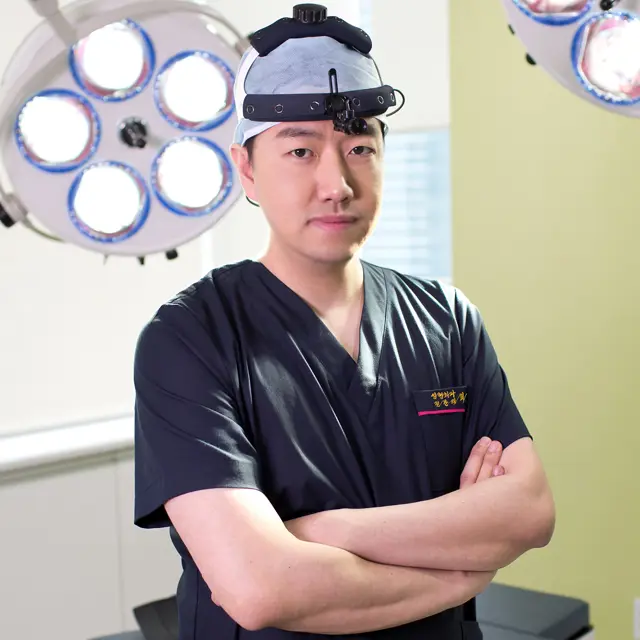
Dr. Choi Min \nFounder and head doctor of ANSWER PLASTIC SURGERY
Liposuction is performed by the clinic's only physician, who also performs the fat grafting that uses the same harvesting technique for a different purpose.
Dr. Choi Min is the founder and head doctor of ANSWER PLASTIC SURGERY and a board-certified plastic surgeon with over 20 years of experience in plastic surgery. He is a member of the Korean Society of Plastic and Reconstructive Surgeons, the Korean Society for Aesthetic Plastic Surgery, the Korean Cleft Palate-Craniofacial Association and the Korean Society for Microsurgery, and a full member of the International Society of Plastic and Reconstructive Surgery. He founded the former O&Young Plastic Surgery Clinic and has served as a guest professor of cosmetic surgery at Paik Hospital.
ANSWER PLASTIC SURGERY operates under a single-director system. Dr. Choi Min personally conducts consultations, surgery and postoperative care, and the clinic states that proxy surgery is not practised.
The clinic employs one physician, so Dr. Choi Min is the performing surgeon for every procedure in this group, supported by two foreign-patient coordinators and English-speaking staff rather than by additional operating surgeons.
Treatment areas are marked before surgery and assessed against skin elasticity as well as fat volume, since how the skin adapts afterwards is part of what decides the contour.
Who Is a Good Candidate for Liposuction?
Adults in good general health.
Adults with localised fat deposits that remain despite a healthy lifestyle.
Adults who maintain a relatively stable weight.
Adults with realistic expectations about the results.
Good skin elasticity may help the skin adapt to the new contours after fat removal. That is a physical property rather than a preference, and it is assessed rather than assumed.
The procedure may be unsuitable in these situations:
People with uncontrolled medical conditions.
People with significant bleeding or clotting disorders.
People with active infections.
People with medical conditions that make anesthesia or surgery unsafe.
Patients with poor skin elasticity, unstable weight, or expectations of substantial weight loss may not achieve their desired outcome. Suitability depends on an individual medical assessment.
Skin elasticity is worth understanding before the consultation rather than during it. Fat occupies space under the skin; removing it leaves the skin to redrape over a smaller volume. Skin with good elasticity does that well. Skin that has been stretched for years, or that has lost elasticity with age, may not, and the result is loose skin over a thinner layer rather than a smoother contour. That is why poor skin retraction appears among the complications and why the American Society of Plastic Surgeons notes that secondary procedures may sometimes be recommended to reduce excess skin. A surgeon raising this at consultation is describing the physics of the operation, not discouraging it.
The same reasoning explains why the clinic's material names specific areas — the abdomen, waist, thighs, hips, arms and chin — rather than offering liposuction as a general treatment. Those are the sites where localised deposits persist despite a healthy lifestyle, which is the finding this operation is designed for. A deposit that has not responded to diet and exercise is the clearest indication; a general wish to be smaller is not, and the two are separated at the consultation rather than left to be discovered in the mirror three months later.
What to Expect: Procedure, Recovery, and Results Timeline
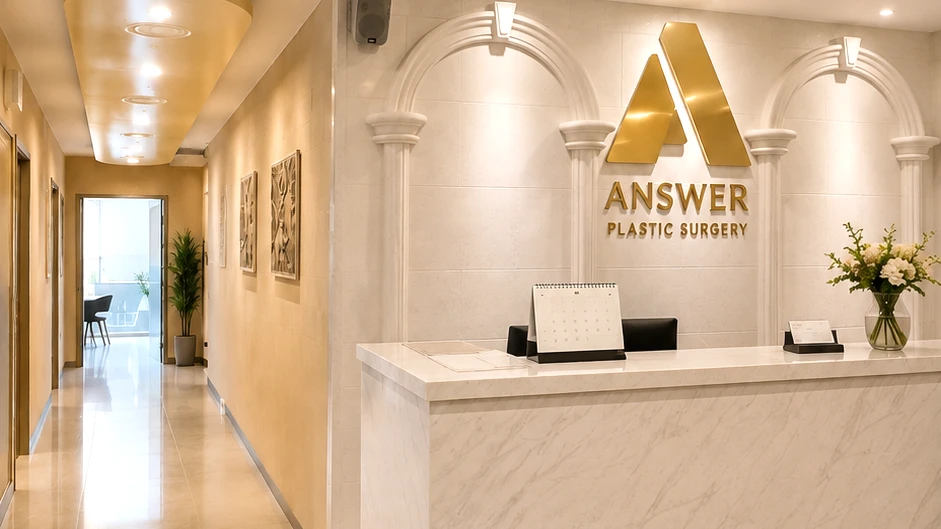
Surgery may take approximately one to four hours, depending on the number of areas treated, the volume of fat removed, and the surgical technique. Many patients return home the same day after observation, while more extensive procedures may require overnight monitoring. Postoperative reviews are necessary to assess healing and recovery.
Preparation for this operation is specific enough to be worth setting out. Nicotine products are avoided before surgery because they can impair healing, alcohol is avoided for the period the surgical team specifies, and every medication, supplement, allergy and medical condition is disclosed. Prescribed blood-thinning medication is never stopped without medical advice. Requested medical tests are completed beforehand, fasting instructions are followed where sedation or general anesthesia is planned, and transportation and assistance after surgery are arranged in advance rather than on the day.
The instruments involved are a liposuction cannula and a suction or aspiration system with collection containers, alongside surgical instruments, anesthesia equipment and monitoring devices. Some techniques are power-assisted, ultrasound-assisted or laser-assisted. Which method is used follows from the surgical plan and the treatment area rather than from a fixed preference.
Stage | What is typical |
|---|---|
Weeks 1–2 | Bruising, swelling and soreness are common |
Days to 2 weeks | Many patients gradually resume light daily activities, depending on the extent of surgery |
Several weeks | Compression garments may be recommended |
Several months | Swelling can continue |
Months 3–6 | Final contours are commonly assessed |
Some contour changes are visible soon after surgery, but swelling initially obscures the outcome. Fat cells removed during surgery do not return, but remaining fat cells can enlarge if weight increases. For international patients the clinic's planning figure is approximately eight to fourteen days in Korea, with flying home after that period.
Liposuction can reduce localised fat deposits and improve body proportions in treated areas. Results may be long-lasting when body weight remains stable. It does not reliably treat cellulite, significantly tighten loose skin, or replace healthy lifestyle habits — three limits worth stating before surgery rather than discovering after it.
Potential complications include infection, significant bleeding, fluid accumulation, fat necrosis, persistent contour irregularities, noticeable asymmetry, and poor skin retraction. Rare but serious complications include blood clots, fat embolism, and injury to internal structures. The likelihood of complications depends on the extent of liposuction and individual health factors.
Aftercare is a protocol rather than general advice. Compression garments are worn as directed, incision sites are kept clean, prescribed medication is taken according to instructions, and scheduled follow-up appointments are attended. Gentle walking begins as advised to support circulation, while strenuous exercise and heavy lifting wait until the surgeon clears them. Temporary numbness, mild firmness and unevenness are common while healing and usually improve as recovery progresses. Prompt medical attention is advised for fever, increasing redness, severe or worsening pain, chest pain, shortness of breath, or one-sided leg swelling.
Liposuction risks listed by the American Society of Plastic Surgeons include anesthesia risks, bruising, cannula breakage, change in skin sensation that may persist, damage to deeper structures such as nerves, blood vessels, muscles, lungs and abdominal organs, deep vein thrombosis and cardiac and pulmonary complications, fluid accumulation, infection, irregular contours or asymmetries, irregular pigmentation, the need for revision surgery, poor wound healing, rippling or loose skin and worsening of cellulite, swelling, and thermal burn from ultrasound-assisted technique.
Two of the rare complications on that list deserve a sentence rather than a line. Blood clots and fat embolism are both circulatory events, and both are part of why early and regular movement after surgery is advised and why a long flight is not booked for the first days of recovery. The clinic's travel guidance asks patients to confirm with the treating surgeon when it is medically appropriate to fly; for this procedure that instruction has a specific reason behind it.
The clinic also records what patients from the United States weigh before travelling for body surgery: the surgeon's experience and relevant surgical expertise, whether a proposed procedure aligns with individual circumstances, what recovery will require of daily activities and travel, and the availability of follow-up guidance after returning home. For an operation with compression garments worn for weeks and contours still settling at three to six months, the last of those is a practical question rather than a reassurance.
Before surgery, give the surgeon a full medical history, details of weight history and any planned weight change, and a complete list of medicines and supplements, and follow the clinic's instructions on smoking, medication adjustments and fasting. Afterwards, wear the compression garment as directed, follow the wound-care and medication instructions, move early and regularly as advised to reduce the risk of blood clots, and attend the postoperative reviews.
Liposuction Compared with the Alternatives
Alternatives include lifestyle-based weight management and non-surgical body-contouring treatments.
Option | What it does | Limit |
|---|---|---|
Liposuction | Removes larger localised fat deposits surgically | Involves anesthesia, recovery and surgical risks |
Lifestyle weight management | Reduces overall body fat | May not selectively target specific areas |
Non-surgical body contouring | Produces modest changes | Can require multiple sessions |
The first row is the only one that can act on one area without acting on the rest, and the second is the only one that improves overall health as a side effect. Those are genuinely different propositions rather than degrees of the same one.
The sequence between them matters too. Candidacy for liposuction includes maintaining a relatively stable weight, which means lifestyle-based management is not only an alternative to surgery but frequently a precondition for it. A patient still losing or gaining substantially is better served by reaching a stable point first, because the contour achieved at one weight does not hold at another.
Combining Liposuction with Other Treatments
Liposuction may be combined with selected procedures such as abdominal contouring surgery, fat grafting, or other body-contouring operations when medically appropriate.
Abdominal contouring surgery, where loose skin is part of the concern that liposuction will not address.
Autologous fat grafting, where fat removed from one area is transferred to another.
Combining procedures can address multiple concerns but may increase operating time, recovery needs, and complication risks. Where excess skin is the real issue, the American Society of Plastic Surgeons notes that secondary procedures may sometimes be recommended to reduce it — a sequence worth understanding before the first operation rather than after.
Safety, Precision, and Clinic Standards
CCTV cameras are installed in the operating rooms. The clinic reports sterilisation and disinfection procedures for surgical instruments. The clinic maintains hygiene management procedures within its clinical operations. The clinic reports having emergency preparedness systems in place. Postoperative care is managed by the director personally.
Individualised surgical planning is developed from each patient's anatomy and stated surgical goals. Every treatment plan at ANSWER PLASTIC SURGERY begins with a one-on-one consultation in which the surgeon reviews the patient's condition, medical history and surgical goals before any technique or material is proposed. Appointment-based scheduling gives each consultation dedicated time for discussion and surgical planning. 3D virtual plastic surgery simulation is available to support preoperative consultation and planning.
The clinic's guidance for patients travelling from the United States covers coordinating travel to Seoul for consultation and treatment, arranging appointments in advance through the online contact page, planning clinic visits around the itinerary, discussing the treatment schedule with the clinic before finalising return travel, allowing sufficient time for postoperative recovery based on the procedure and the surgeon's advice, and confirming with the treating surgeon when it is medically appropriate to fly. Confirming appointment details, medical documentation and follow-up arrangements before departure belongs on the same list.
The concerns this clinic records for this market include the surgeon's experience and relevant surgical expertise, whether a proposed procedure aligns with individual aesthetic goals and medical circumstances, how surgical planning accounts for individual facial features and proportions, what recovery will require of daily activities and travel, and the availability of follow-up guidance after returning home.
ANSWER PLASTIC SURGERY is a Registered Medical Institution for Attracting Foreign Patients, certified by the Ministry of Health and Welfare in compliance with the Medical Overseas Expansion and Foreign Patients Attraction Act. Registration of that kind records that the institution may treat foreign patients; it is not an accreditation of surgical outcomes.
International patients are supported by two designated foreign-patient coordinators, Jung In-young and Yeom A-ran, with English-speaking staff and translators assisting throughout consultation and treatment.
The Bottom Line
Liposuction removes localised fat deposits to improve body contour in targeted areas.
It is contouring rather than weight loss, and it does not reliably treat cellulite or tighten loose skin.
Surgery takes approximately one to four hours, often with same-day discharge.
Compression garments may be recommended for several weeks; final contours are assessed at three to six months.
Removed fat cells do not return, but remaining fat cells can enlarge if weight increases.
Frequently Asked Questions
Is liposuction a weight-loss procedure? No. It is designed to improve body contours and proportions rather than to treat obesity or substitute for weight loss, and patients expecting substantial weight loss may not achieve their desired outcome.
Will the fat come back? Fat cells removed during surgery do not return, but remaining fat cells can enlarge if weight increases. Results may be long-lasting when body weight remains stable.
Will it tighten my skin? Not reliably. Liposuction does not significantly tighten loose skin, and poor skin retraction is among the listed complications. Good skin elasticity helps the skin adapt to the new contours, which is why it is assessed beforehand.
How long does surgery take? Approximately one to four hours, depending on the number of areas treated, the volume removed, and the technique. Anesthesia may be local, local with sedation, or general.
How long do I wear the compression garment? It may be recommended for several weeks. Bruising, swelling and soreness are common during the first one to two weeks, and swelling can continue for several months.
How long should I stay in Korea? Approximately eight to fourteen days, with flying home after that period. Early and regular movement is advised during recovery, which matters more before a long flight than after a short one.
What about very large volumes? The American Society of Plastic Surgeons states that special considerations are needed when large amounts — usually more than five litres of fat — are suctioned. The likelihood of complications depends on the extent of liposuction and individual health factors.
Are consultations available in English? Yes. International patients receive liposuction consultations in English at ANSWER PLASTIC SURGERY, with designated coordinators and interpreter assistance throughout.
Book a Consultation at ANSWER PLASTIC SURGERY
To discuss liposuction in Gangnam, Seoul, contact ANSWER PLASTIC SURGERY through its consultation enquiry page, by phone on +82-2-6959-4881, or by email at info@answerpskorea.com.
ANSWER PLASTIC SURGERY is located at 6th Floor, A-Tower, 105 Teheran-ro, Gangnam-gu, Seoul, Republic of Korea (06134). Consultation hours are Monday to Friday, 10:00 AM to 7:00 PM KST, and Saturday, 10:00 AM to 4:00 PM KST; the clinic is closed on Sundays and public holidays. Last registration is 5:30 PM KST on weekdays and 3:00 PM KST on Saturdays.
Recovery after the patient has left Seoul is part of the same plan. The clinic records the follow-up process, recovery guidance, English-language assistance for postoperative questions, interpreter support for recovery concerns, and the aftercare information available to international patients as the matters patients from this market most often want clarified. Patients are also advised to share relevant treatment information and postoperative instructions with a healthcare professional at home. Aftercare is managed in line with the patient's procedure and individual needs.
International patients can contact the clinic through its published phone number and email for enquiries after returning home.
Disclaimer
This page is for general informational purposes and does not constitute individualized medical advice. Candidacy, technique, and expected outcomes can only be determined through a consultation with a qualified physician.
Sources & Further Reading
American Society of Plastic Surgeons — Liposuction Risks and Safety
U.S. Food and Drug Administration — Dermal Fillers (Soft Tissue Fillers)
Other Services
Explore additional treatments offered by our specialists.

Revision Eye Surgery
Revision eyelid surgery evaluates and corrects selected concerns following an earlier eyelid operation, such as asymmetry, scarring, eyelid shape, or excess or insufficient tissue.
Learn More

Facelift
A facelift is a surgical procedure that lifts and repositions facial tissues and removes excess skin to improve sagging around the lower face, jawline, and sometimes the neck.
Learn More

Upper Blepharoplasty
Upper blepharoplasty is a surgical procedure that removes or reshapes excess skin and, when appropriate, fat from the upper eyelids. It may help reduce a heavy or hooded appearance.
Learn More