Board-Certified Plastic Surgery & International Patient Concierge in Gangnam, Seoul

Medical Guide
Contact Lenses and Makeup After Eyelid Surgery: How Soon?
Around three weeks for contact lenses and about a week for heavy makeup are the figures the clinic states, with your surgeon's instructions taking priority.
Schedule a ConsultationContact Lenses and Makeup After Eyelid Surgery: How Soon?
Medically reviewed by: Dr. Choi Min, Board-Certified Plastic Surgeon
These are small questions with practical weight, and the clinic gives more specific figures for them than most. The short version: for lower blepharoplasty, ANSWER PLASTIC SURGERY states avoiding contact lenses for at least three weeks and heavy makeup for one week, with smoking and alcohol avoided for at least four weeks. After canthoplasty, swimming, saunas and contact lenses are avoided for approximately three weeks unless the surgeon advises otherwise. For double eyelid surgery, contact lenses wait until you are cleared. Here is what sits behind those numbers.
The figures, procedure by procedure
Lower blepharoplasty. Avoid smoking and alcohol for at least four weeks, contact lenses for at least three weeks, and heavy makeup for one week. Use ice packs, take prescribed medication, attend follow-up visits and follow the postoperative instructions.
Canthoplasty procedures. Keep the incision clean, follow the clinic's instructions for washing the face and using skincare or makeup, elevate the head while sleeping, and use cold compresses only as instructed. Avoid swimming, saunas and contact lenses for approximately three weeks unless the surgeon advises otherwise.
Double eyelid surgery. Avoid rubbing the eyes, strenuous exercise and contact lenses until cleared, and follow the surgeon's guidance on exercise, swimming, contact lenses, makeup and sun protection. Stitches are often removed around days five to seven after incisional surgery.
Upper blepharoplasty and related procedures. Use prescribed eye drops, ointments and medication as directed, apply cold compresses as instructed, keep the head elevated, avoid rubbing the eyes, protect the incision from sun exposure, and follow instructions on bathing, makeup, contact lenses, exercise and wound care.
Across all of them, the clinic's phrasing defers to the individual instruction you are given. Where your surgeon's figure differs from the general one, the surgeon's figure is the one that applies to you.
The variation between procedures is not arbitrary. Operations that work on the lower lid, or that alter the outer corner of the eye, involve tissue that is directly in contact with the eye surface and with anything you place on it. Operations confined to the upper lid crease are a step removed. That is why the clinic's firmest numbers attach to lower blepharoplasty and canthoplasty, while the guidance after double eyelid surgery is framed as waiting for clearance rather than counting days.
Why contact lenses wait longer than makeup
The two restrictions exist for different reasons, which is why the intervals differ.
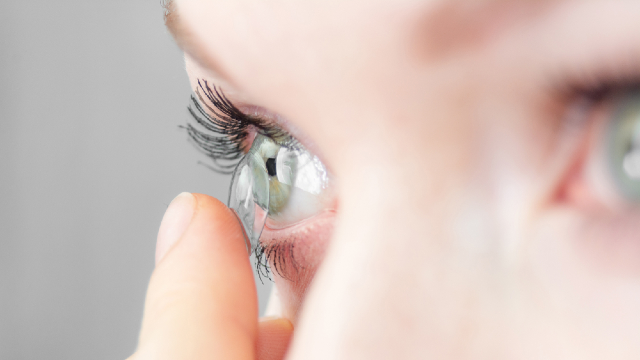
Contact lenses mean handling the eyelid and placing an object directly on the eye surface. Insertion and removal both involve pulling at the lid, which is exactly what a healing incision does not need, and the eye surface itself may be drier than usual after eyelid surgery. The clinic's preoperative questions include dry eyes for a reason: eyelid procedures can affect tear film and lid closure, and lens wear is harder on a dry eye.
Makeup is mainly a wound-contamination and manipulation problem. Product on or near an incision is one issue; removing it is often the larger one, since removal means rubbing. Note that the clinic's figure of one week is specifically for heavy makeup, which implies a gradient rather than a switch, so ask what counts as heavy in your case.
Before surgery, too
The restriction runs in both directions. The clinic's preoperative guidance includes arriving with the eye area clean and without eye makeup if instructed, and following clinic instructions about medicines, smoking, alcohol, fasting and makeup.
If you wear contact lenses daily, plan for that. Bring glasses that you are happy to be seen in for several weeks, and bring a spare pair if your prescription matters to you. Patients who travel internationally with lenses only, and no backup glasses, discover the problem on day one.
A realistic week-by-week picture
For incisional eyelid surgery, the general shape of recovery as the clinic describes it:
Days one to three. Swelling and bruising are common. Cold compresses as directed, head elevated when sleeping, no rubbing.
Days four to seven. Swelling begins to improve. Stitches often removed around days five to seven after incisional surgery.
Days seven to fourteen. Many patients return to daily activities or work. Heavy makeup may become possible around the one-week mark for lower blepharoplasty, if the surgeon agrees.
Weeks two to three. Most visible bruising and swelling improve. Contact lenses typically still waiting.
Around three weeks. The stated interval for resuming contact lenses after lower blepharoplasty and canthoplasty, unless advised otherwise.
For planning a trip, the clinic suggests roughly seven to ten days in Korea for most eyelid procedures and seven to fourteen for ptosis correction and revision eye surgery. You will therefore be back home before the lens restriction lifts.
Packing for the restriction, not for the trip
Because the lens interval outlasts the stay, the practical planning happens in your suitcase rather than in your calendar. Four things are worth bringing.
Glasses, and a spare. If your prescription is strong, losing or breaking the only pair in a country where you cannot read the signs is a genuine problem rather than an inconvenience.
Sunglasses that sit away from the lids. Sun protection of the incision is part of the clinic's aftercare guidance for eyelid procedures, and a frame that rests on swollen skin is one you will stop wearing.
Your own gentle cleanser. You will be washing your face under instruction for a while, and the one you already tolerate is safer than whatever is in the hotel.
A hat with a brim. It does the sun-protection job without touching anything.
What not to pack: a plan to look photographed. Most visible bruising and swelling improve over roughly two to three weeks, which for most patients begins to resolve properly after the flight home.
What not to wait on
Separate from the cosmetic questions, the clinic names symptoms that call for urgent attention rather than patience: sudden vision changes or severe increasing pain after double eyelid surgery, and worsening vision, severe pain, increasing redness or unusual discharge more generally.
Do not try to judge those yourself after you have flown home. Establish before you leave which channel to use for postoperative questions and who will read it. The clinic describes postoperative follow-up and support throughout recovery, with interpreter assistance available for international patients, and the useful time to learn how that works is in advance.
Ask these questions through the ANSWER PLASTIC SURGERY contact page before you travel, and read the clinic's own account of how it supports international patients on the ANSWER PLASTIC SURGERY about page.
The Bottom Line
- After lower blepharoplasty: contact lenses at least three weeks, heavy makeup one week, smoking and alcohol at least four weeks.
- After canthoplasty: swimming, saunas and contact lenses for approximately three weeks unless the surgeon advises otherwise.
- After double eyelid surgery: contact lenses, eye rubbing and strenuous exercise wait until you are cleared.
- Lenses wait longer than makeup because they involve handling the lid and the eye surface itself.
- Your surgeon's specific instruction overrides any general figure, including the ones in this article.
Frequently Asked Questions
When can I wear eye makeup again?
The clinic states one week for heavy makeup after lower blepharoplasty, with other procedures directing you to the surgeon's instructions on makeup. Ask what counts as heavy, and ask how you should remove it, since removal involves rubbing.
When can I wear contact lenses?
At least three weeks after lower blepharoplasty, and approximately three weeks after canthoplasty unless the surgeon advises otherwise. After double eyelid surgery, until you are cleared.
Can I wear glasses instead?
Yes, and plan for it. Bring glasses you are comfortable wearing for several weeks, since the restriction will usually outlast your stay in Korea.
What about swimming and saunas?
Avoid both for approximately three weeks after canthoplasty, along with contact lenses, unless your surgeon says otherwise.
Should I stop wearing lenses before surgery?
Follow the clinic's preoperative instructions, which cover contact lenses among medicines, smoking, fasting and makeup. Arrive with the eye area clean and without eye makeup if instructed.
What if my eyes feel dry afterward?
Mention it, and mention any history of dry eye before surgery too, since the clinic asks about it in the preoperative history. Use prescribed drops or ointments as directed rather than substituting something of your own.
Which symptoms mean I should contact the clinic immediately?
Sudden vision changes, severe or increasing pain, worsening vision, increasing redness or unusual discharge. These are not matters for waiting until the next scheduled check.
This article is for general informational purposes only and is not individualized medical advice or a tool for self-diagnosis. Whether any procedure described here suits you can only be decided by a board-certified plastic surgeon who examines you in person, and individual results vary.
More Articles
Continue reading our clinical guides.

How Long Should You Stay in Korea After Rhinoplasty?
About fourteen days is the cautious planning figure for US patients, but the real answer runs from one to two days to two weeks by procedure type.
Learn More

When Is It Safe to Fly After a Facelift or Forehead Lift?
Around ten to fourteen days is the planning figure, but the clinic's rule is firmer: no fixed departure date until the operating surgeon has examined you.
Learn More
Does Dr. Choi Min Speak English? Interpreters and Coordinators
Yes, and the clinic also names two foreign-patient coordinators. How English support, interpreter assistance and a single-director system fit together.
Learn More