Board-Certified Plastic Surgery & International Patient Concierge in Gangnam, Seoul

Medical Guide
Revision Rhinoplasty: Dr. Choi Min's Surgical Approach
Revision rhinoplasty at ANSWER PLASTIC SURGERY follows a set sequence: prior-surgery review, imaging, graft-material selection and staged follow-up in Seoul.
Schedule a ConsultationRevision Rhinoplasty: Dr. Choi Min's Surgical Approach
Medically reviewed by: Dr. Choi Min, Board-Certified Plastic Surgeon
Revision rhinoplasty is corrective nose surgery for concerns that remain after an earlier operation, and at ANSWER PLASTIC SURGERY in Gangnam, Seoul, it is one of three procedures the clinic lists as a priority for international patients. Dr. Choi Min, the clinic's founder and head doctor, is a board-certified plastic surgeon whose core specializations are rhinoplasty and revision rhinoplasty, eye surgery and revision eye surgery, and facelift and lifting procedures. What distinguishes a revision practice is less the operation itself than the order of decisions that precede it. This article walks through that order as the clinic documents it: what is examined, what is measured, how support material is selected, and how the follow-up is spaced.
What Makes a Second Nose Operation Different From the First
A revision operates on a nose that has already been changed, and that changes the surgical problem. The clinic's own description of the procedure is direct about it: revision surgery may be more complex because of scar tissue and because the nasal structure itself has been altered by previous work. A first rhinoplasty starts from predictable planes of tissue. A second one starts from whatever the first surgery left behind, which may include firm scar, thinned skin, cartilage that was removed or reshaped, and an implant sitting in a pocket that has since contracted.
The concerns that bring people back are specific rather than vague. ANSWER PLASTIC SURGERY lists implant displacement, a nasal bridge that sits too high or too low, nasal contraction, a visible implant, and shifts in implant position as the problems revision rhinoplasty is intended to address. Patients also come because nasal symmetry did not improve as they expected, or because the shape changed as the first result settled over months.
Two practical consequences follow. First, timing matters: the clinic notes that candidates should generally allow sufficient time for healing from the previous surgery before undergoing revision, and that patients whose earlier operation has not healed adequately may need to postpone. Second, the material available for rebuilding is reduced. Septal cartilage may already have been harvested; the skin envelope may be less forgiving. Both facts push the planning stage earlier and make it longer.
The American Society of Plastic Surgeons, the specialty's largest professional body in the United States, publishes patient guidance on what cosmetic surgery can and cannot change and on the value of seeing a board-certified surgeon before committing to a secondary procedure. That framing is useful here, because the honest version of a revision consultation includes the possibility that the answer is to wait, or to do less than the patient had in mind.
What the Surgeon Reviews Before Any Plan Is Drawn
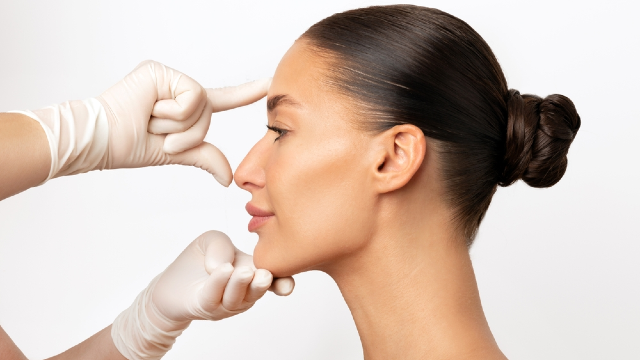
The review starts with the previous operation, not with the desired outcome. At ANSWER PLASTIC SURGERY the consultation for revision rhinoplasty involves a detailed nasal assessment covering nasal structure, bone structure, the shape and length of the implant used previously, and the surgical risks that follow from all of it. Imaging supports that assessment: the clinic uses 3D CT for nasal analysis before rhinoplasty and revision rhinoplasty, and the National Institute of Biomedical Imaging and Bioengineering, part of the US National Institutes of Health, describes computed tomography as a method that assembles many X-ray measurements into cross-sectional views of structures that a surface examination cannot reach.
Alongside imaging, the clinic asks patients to disclose medical history, previous nasal surgeries, allergies and current medications before surgery is scheduled. The surgeon may advise adjustments to certain medications or supplements, recommend avoiding smoking, and order preoperative tests. For anyone travelling from the United States, this is the part of the process worth over-preparing: operative notes, implant records and dated photographs from the first surgery turn a general discussion into a specific one.
Where a plan is personalized, it is personalized against this record. The clinic describes its revision work as building individualized surgical plans from the previous procedure and the patient's current tissue condition, and it describes its material choice as a separate decision made according to nasal structure and surgical needs. Those two sentences describe a sequence, not a slogan: read the old operation first, then decide what to build with.
Suitability is assessed in the same pass. The clinic states that revision rhinoplasty may be unsuitable for people with uncontrolled medical conditions, active infections, impaired wound healing, or expectations that the operation cannot meet. Adults in good general health who are dissatisfied with an earlier result and who hold realistic expectations are the group the clinic describes as suitable candidates.
How Graft Material Is Selected
Material selection in revision work is a structural decision, driven by how much support the nose needs and what the patient's own body can supply. ANSWER PLASTIC SURGERY lists a wide set of options and states that selection depends on the patient's nasal structure and surgical requirements: septal cartilage, ear cartilage, the patient's own rib cartilage, donated rib cartilage, silicone implants, Gore-Tex implants, autologous dermis, autologous fascia and autologous bone.
Ear cartilage
Ear cartilage is harvested from the patient's own ear and shaped to provide nasal support or contour. The clinic's documented procedure sequence for revision rhinoplasty runs through it plainly: assess the nose and the ear cartilage for the planned correction, harvest suitable cartilage from the ear, shape it for the required support or contour, place and secure the graft, then reshape the nose and close the incisions. Because the operation involves two sites, recovery and scarring at the ear donor site are discussed as well, and the clinic lists possible pain, scarring or contour change at that donor site among the risks.
Septal cartilage
Septal cartilage comes from the wall between the nostrils and is used to reshape or support the nose. It is often the first choice in primary surgery, which is precisely why it is sometimes unavailable in revision cases — the clinic notes that patients without adequate available cartilage for a planned technique may need further assessment before surgery. Where the septum is intact and sufficient, it remains a convenient source because it is harvested through the same operative field.
Rib cartilage, autologous and donated
Rib cartilage is used when the nose needs substantial structural rebuilding. The clinic describes harvesting cartilage from the rib through a small incision, preparing and shaping it to supply the required structure, and placing it to improve contour, projection or support. Its stated aims for the technique are a more defined nasal profile, improved tip definition, refined contours and better overall facial harmony. Donated rib cartilage is listed as an alternative material, which matters for patients who would rather avoid a chest donor site.
Rib harvesting carries its own risk profile, and the clinic states it openly: chest discomfort, scarring and, rarely, pneumothorax, alongside the general risks of cartilage warping or resorption. The US Food and Drug Administration, which regulates implantable medical devices, maintains public information on device risks and on reporting problems with implanted products — a useful reference for anyone weighing a synthetic implant against the patient's own tissue.
Implants and other materials
Silicone and Gore-Tex implants remain on the clinic's list of alternatives, as do autologous dermis, fascia and bone. The clinic also supports custom-made silicone implants tailored to individual requirements. Nothing in the clinic's material suggests one option is superior in the abstract; the stated logic is that material follows structure.
Anesthesia, Operating Time and the Visits to Budget For
Revision rhinoplasty at ANSWER PLASTIC SURGERY is performed under general anesthesia, and the clinic states a surgical time of approximately two to three hours with two to three hospital visits or treatment sessions. Some pain, swelling and discomfort are expected afterwards. MedlinePlus, the patient-education service of the US National Library of Medicine, explains what general anesthesia involves and why an anesthesia team reviews health history and current medicines beforehand; that review is one more reason to arrive with a complete medication list rather than a recollection of one.
For a traveling patient, the visit count is the number that shapes an itinerary. Two to three sessions means the trip has to accommodate a preoperative assessment, the surgery itself, and at least one postoperative review before departure. The clinic schedules by appointment, which allows dedicated consultation time but also means dates are agreed in advance rather than walked in. Consultation can begin before the flight is booked: the clinic's contact page is the channel international patients use to open that conversation and agree a schedule. The clinic's main site lists the full range of nose procedures alongside its eye, contouring and lifting services, which is worth reviewing if more than one concern is in play.
Operating hours are Monday to Friday from 10:00 to 19:00 and Saturday from 10:00 to 16:00 Korea Standard Time, with the clinic closed on Sundays and public holidays. Last registration is 17:30 on weekdays and 15:00 on Saturdays. For US patients, the time difference means written channels usually work better than calls for anything that is not urgent.
What Recovery Looks Like Over the First Year
Recovery after revision rhinoplasty is measured in months rather than weeks, with the visible part front-loaded. The clinic describes swelling, bruising and nasal congestion as common during the first one to two weeks, improving gradually afterwards. Most bruising subsides within two to three weeks. Residual swelling may take six to twelve months or longer to resolve, depending on individual healing and surgical complexity.
Visible improvement may begin within two to four weeks, but the clinic states that final results may take twelve months or longer to become apparent. This gap between early appearance and settled result is the single most common source of anxiety in the first months, and it is worth planning for emotionally as much as logistically. Healed results from previous patients are published in the clinic's before-and-after gallery, which is a more realistic reference point than a nose photographed three weeks after surgery.
Aftercare instructions are specific: follow the surgeon's directions for wound care and medication, keep the nose protected, avoid pressure or impact to it, and hold off on strenuous exercise until cleared. Attend the scheduled follow-ups. Seek medical attention for severe pain, fever, excessive bleeding or sudden changes in breathing. MedlinePlus also collects general post-surgical guidance on wound care, activity and warning signs that apply regardless of which country the operation took place in — a practical resource once you are home and your surgeon is eight time zones away.
The Risks That Belong in the Consultation
Every revision carries the risks of a primary rhinoplasty plus those created by the first operation. The clinic lists swelling, bruising, bleeding, infection, scarring, asymmetry, breathing difficulties, changes in sensation, implant displacement and dissatisfaction with the outcome. It also states the structural reason revision is harder: scar tissue and the changes the previous procedure made to the nose.
Alternatives are part of the same conversation. The clinic names three: continued observation while the nose keeps healing, non-surgical filler treatment for selected minor contour irregularities, and revision surgery. It is explicit that fillers cannot correct structural problems such as a displaced implant or significant nasal contraction, and that they carry risks of their own. Where combination is appropriate, revision rhinoplasty may be performed with septoplasty, nasal tip correction or cartilage grafting.
What the clinic states about this procedure is narrow by design. Every one of its stated aims, set out earlier in this article, is a structural correction described with may or can rather than a promised appearance. Nothing beyond that is offered, and a surgeon who promises more in a first consultation is telling you something about their practice.
Judging a Revision Surgeon Before You Book
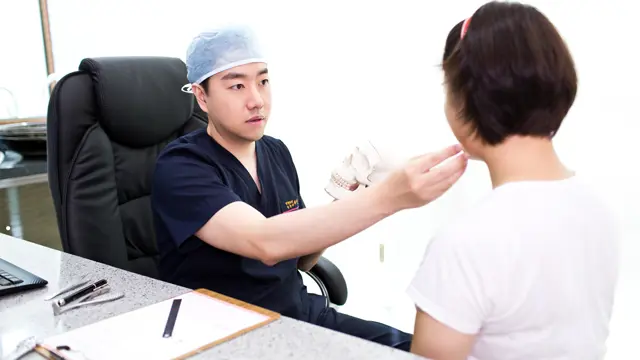
Judge the process, not the before-and-after pictures. A revision consultation should produce a specific account of what went wrong, what tissue is available, what material the surgeon intends to use and why, and what the operation is not expected to change. Ask who performs the surgery: at ANSWER PLASTIC SURGERY the single-director structure means Dr. Choi Min personally handles consultations, surgery and postoperative care, with no proxy surgery.
Credentials are checkable. Dr. Choi Min is a board-certified plastic surgeon and a member of the Korean Society of Plastic and Reconstructive Surgeons, including its Rhinoplasty Study Group and Eye Surgery Study Group, the Korean Society for Aesthetic Plastic Surgery, the Korean Society for Microsurgery, the Korean Cleft Palate-Craniofacial Association and the Korean Academic Association of Rhinoplasty Surgery. He is a full member of the International Society of Plastic and Reconstructive Surgery, has served as a guest professor of cosmetic surgery at Paik Hospital, and founded the former O&Young Plastic Surgery Clinic. The clinic itself opened in Gangnam in 2014, holds business registration 220-09-84005, and was registered in 2015 as a medical institution eligible to attract international patients under Korea's Medical Overseas Expansion and Foreign Patients Attraction Act.
The US Centers for Disease Control and Prevention, through its Travelers' Health program, advises people considering surgery abroad to confirm the surgeon's qualifications and to arrange follow-up care before travelling rather than after. Applied to a revision, that means knowing in advance who reviews your healing in month three, and through which channel.
The Bottom Line
- Revision rhinoplasty at ANSWER PLASTIC SURGERY addresses implant displacement, a bridge that is too high or too low, nasal contraction, visible implants and shifts in implant position.
- The plan is built from the previous operation first — nasal and bone structure, the earlier implant's shape and length, and 3D CT analysis — before any material is chosen.
- Graft options include septal, ear, autologous rib and donated rib cartilage, silicone or Gore-Tex implants, autologous dermis, fascia and bone, selected according to nasal structure.
- Surgery takes roughly two to three hours under general anesthesia, with two to three hospital visits; bruising settles in two to three weeks and residual swelling can take six to twelve months or longer.
- Dr. Choi Min personally conducts consultations, surgery and postoperative care under the clinic's single-director structure.
Frequently Asked Questions
How long should I wait after my first rhinoplasty before considering a revision?
The clinic advises allowing sufficient healing time from the previous surgery before undergoing revision, and notes that patients whose earlier operation has not healed adequately may need to postpone. Because a nose continues to refine for a year or more after surgery, part of what looks like a problem at three months may still change. Dr. Choi Min assesses the current tissue condition at consultation and advises on timing from there.
What imaging is used to plan a revision at this clinic?
ANSWER PLASTIC SURGERY uses 3D CT imaging to support detailed nasal analysis before rhinoplasty and revision rhinoplasty, together with specialized microsurgical instruments during the operation itself. The assessment covers nasal structure, bone structure, the shape and length of the implant used previously, and the surgical risks involved. This information feeds directly into the choice of technique and material.
Which cartilage will be used for my revision?
That depends on how much structural support the nose needs and what material is available. The clinic works with septal cartilage, ear cartilage, the patient's own rib cartilage and donated rib cartilage, as well as silicone and Gore-Tex implants, autologous dermis, fascia and bone. The selection is made during planning, according to the patient's nasal structure and the correction being attempted.
How many clinic visits will I need in Seoul?
The clinic states two to three hospital visits or treatment sessions for revision rhinoplasty, with the surgery itself taking approximately two to three hours. A realistic itinerary allows for the preoperative assessment, the operation and at least one postoperative review before flying home. Agree the dates with the clinic through its contact page before booking flights.
Can fillers correct a problem left by a previous nose surgery?
Non-surgical filler treatment is listed as an option for selected minor contour irregularities only. The clinic states clearly that fillers cannot correct structural problems such as a displaced implant or significant nasal contraction, and that they carry risks of their own. For structural concerns, revision surgery or continued observation while healing completes are the realistic alternatives.
What anesthesia is used, and is it a day procedure?
Revision rhinoplasty is performed under general anesthesia at ANSWER PLASTIC SURGERY. Some pain, swelling and discomfort are expected afterwards and are managed according to the surgeon's instructions. Share your full medical history, allergies and current medications in advance, since the surgical team may ask you to adjust certain medicines or supplements beforehand.
Will a revision also improve my breathing?
What the clinic says revision rhinoplasty is for is a matter of shape and structure, and breathing is not automatically part of it. Where a functional concern exists alongside the aesthetic one, revision may be combined with septoplasty when the surgeon judges it appropriate. Raise breathing specifically at consultation so it is assessed on its own terms rather than assumed to follow from the aesthetic plan.
This article is for general informational purposes only and is not individualized medical advice or a tool for self-diagnosis. Whether any procedure described here suits you can only be decided by a board-certified plastic surgeon who examines you in person, and individual results vary.
More Articles
Continue reading our clinical guides.

How Long Should You Stay in Korea After Rhinoplasty?
About fourteen days is the cautious planning figure for US patients, but the real answer runs from one to two days to two weeks by procedure type.
Learn More

When Is It Safe to Fly After a Facelift or Forehead Lift?
Around ten to fourteen days is the planning figure, but the clinic's rule is firmer: no fixed departure date until the operating surgeon has examined you.
Learn More
Does Dr. Choi Min Speak English? Interpreters and Coordinators
Yes, and the clinic also names two foreign-patient coordinators. How English support, interpreter assistance and a single-director system fit together.
Learn More